


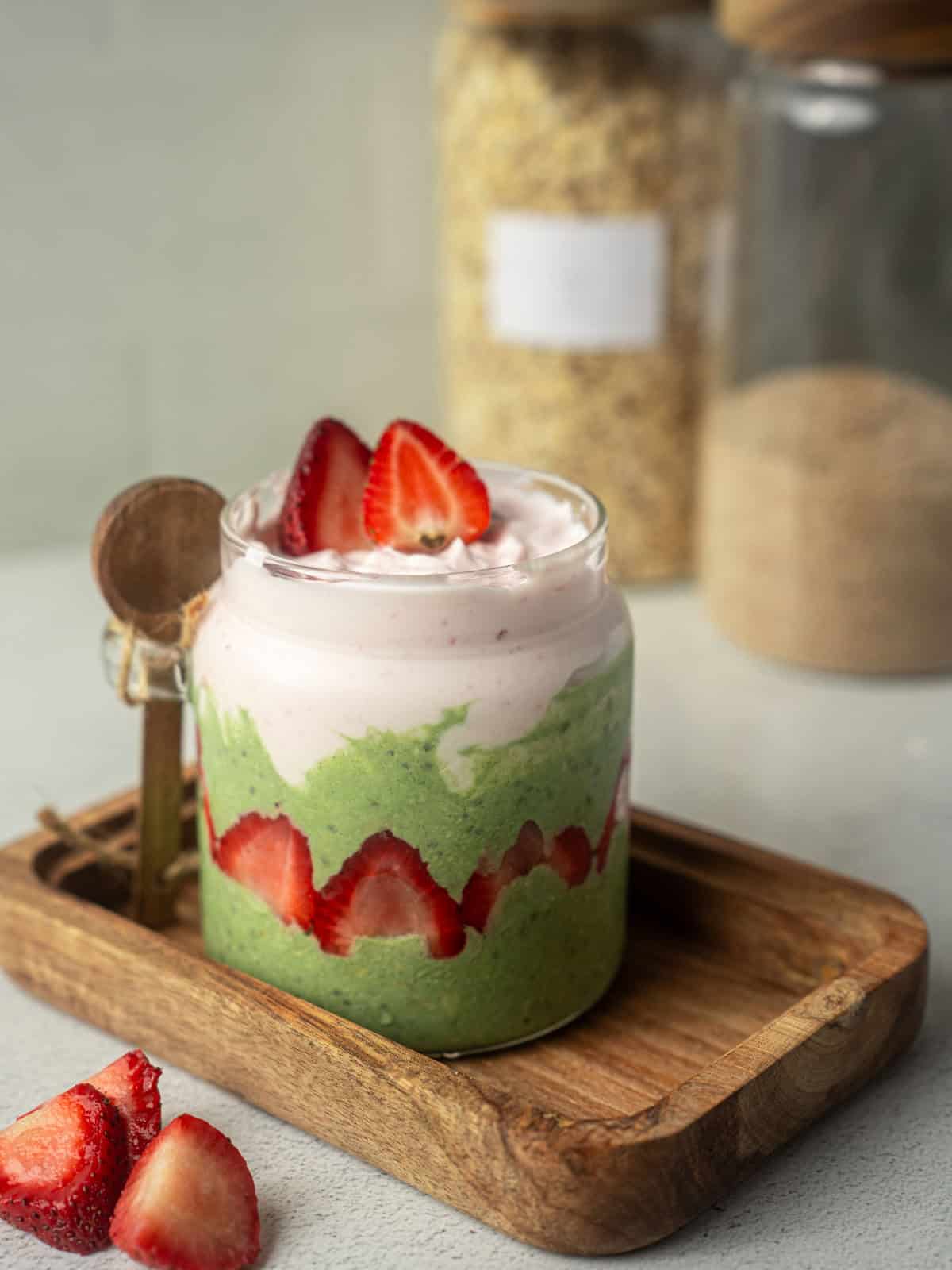
These strawberry matcha overnight oats are a creamy, nutrient-balanced breakfast made with real strawberries, matcha, and protein-rich yogurt for a satisfying start to your day.
A Quick Look At This Recipe
✅ Recipe Name: Strawberry Matcha Overnight Oats (Layered & High Protein)
🕒 Ready In: ~5 minutes prep + overnight chilling
👪 Serves: 1
🍽 Nutrition: 30 grams of protein and 8 grams of fiber per serving
🥣 Main Ingredients: Rolled oats, milk or kefir, Greek yogurt, matcha, honey, strawberries, chia seeds
📖 Dietary Info: Vegetarian, gluten-free friendly, high protein, gut-friendly
Matcha has taken over the internet lately, and while I still reach for coffee in the morning, I love using matcha in recipes like this one. Buying matcha drinks and goods at cafés can be expensive, so making your own at home is an easy way to save money.
The earthy flavor pairs perfectly with sweet strawberries, which is why this combination works so well.
If you love easy, make-ahead breakfasts like this, you might also enjoy my Creamy High-Protein Overnight Oats or my Oat Breakfast Bars, another great option to prep on Sunday and eat all week.
Jump to:
Why This Recipe Is Good for You
- Made with kefir, a fermented dairy drink packed with gut-friendly bacteria, which most overnight oat recipes skip entirely. There is an option to use milk if preferred.
- High in protein thanks to double Greek yogurt, with one layer in the oat base and another in the strawberry topping.
- Chia seeds add fiber and naturally thicken the oats overnight for a creamy texture.
- Naturally sweetened with just a teaspoon of honey.
- Quick. Just five minutes of prep the night before and breakfast is ready to go.
- Works with fresh or frozen strawberries, so you can make it year-round.
- Easy to customize with optional collagen or protein powder if you want an extra protein hit.
What is Matcha? (And Does the Hype Hold Up?)
Since matcha is the star ingredient here, it’s worth taking a moment to look at what it actually is and what the research does and doesn’t support.
Matcha is a finely ground powder made from shade-grown green tea leaves. Unlike regular green tea, where you steep and remove the leaves, matcha allows you to consume the whole leaf. This is why it contains higher concentrations of certain compounds compared with standard green tea.
The benefits the science actually supports
Matcha is rich in antioxidants, particularly a group called catechins. It also contains L-theanine, an amino acid that works alongside caffeine to create a steadier, calmer energy compared with coffee. You get focus without as many jitters. Some research also suggests potential links to cardiovascular and metabolic health, although the evidence is still emerging.
The things worth being realistic about
Matcha does contain caffeine. Per gram, it can contain more caffeine than regular tea and amounts comparable to coffee. If you are caffeine sensitive or pregnant, where recommendations suggest keeping intake under 200 mg per day, it is worth being mindful of how much you use. Matcha can also reduce iron absorption because of its tannin content, so try to leave at least an hour between an iron-rich meal and drinking matcha. And while you may see claims that matcha boosts metabolism or burns fat, the research here is weak and any effects are not thought to be clinically meaningful.
The bottom line
Matcha is a genuinely nutritious ingredient worth including if you enjoy it. Just don’t expect miracles, and don’t feel pressured to drink it because social media says you should.
Matcha Grades and Safety
You’ll often see matcha labeled as either ceremonial or culinary grade, and many people assume one is safer or healthier than the other. In reality, these terms mostly describe flavor and intended use, not safety.
Ceremonial grade matcha is typically made from younger tea leaves and has a smoother, milder taste, which makes it ideal for drinking on its own. Culinary grade has a slightly stronger flavor and is designed to hold up well in recipes like smoothies, baking, or overnight oats.
When it comes to safety, the grade itself is not what matters. Heavy metal contamination, including lead, depends on where the tea is grown and how it is tested. The most important thing is choosing matcha from a reputable brand that carries out quality testing. Japanese-sourced matcha is often preferred because of strict production standards.
For this recipe, you can use either grade. If you already enjoy ceremonial grade matcha, it will work well, just keep in mind it is usually more expensive. If you want a more budget-friendly option for recipes, a good-quality culinary grade works perfectly too.
Key Ingredients
The complete ingredient list with measurements can be found in the recipe card below.

- Matcha powder: Look for a bright green colour, dull or yellowish matcha often indicates lower quality or older stock.
- Kefir or milk: Kefir is a fermented dairy drink found in most supermarkets, usually near the yogurt. It's thinner than yogurt but thicker than milk, and it adds a mild tang that works really well with the matcha and honey. Plain kefir is what you want here. If you can't find kefir, you can use any milk of your preference instead.
- Rolled oats: Use regular rolled oats (also called old-fashioned oats) rather than instant oats. Instant oats will go mushy overnight, while rolled oats absorb the liquid more slowly and give you a better texture by morning.
- Greek yogurt: Used in both the oat base and the strawberry layer. Go for a plain, full-fat or 2% Greek yogurt for the best creaminess. I like Fage. A lower-fat yogurt will work but the texture won't be quite as thick and creamy.
- Strawberries: Fresh or frozen both work.
- Honey: Just a teaspoon to sweeten the oat base. You can leave it out if you prefer, or swap for maple syrup.
- Chia seeds: These swell overnight and help thicken the oats, try not to skip them. If you can't find chia seeds linseeds or flaxseeds also work well.
Ingredient Substitutions
- Dairy-free: Swap the kefir for a dairy-free kefir (coconut or oat kefir work well) and use a thick coconut or soy yogurt in place of Greek yogurt in both layers. The protein content will be lower, but it will still be delicious. You can also use a plant based milk alternative in place fo the kefir.
- Higher protein: Stir a tablespoon of collagen powder or vanilla protein powder into the oat base. If you add protein powder, you may need a splash more liquid as it tends to thicken the mixture. I also have a post on whether collagen supplements are worth it if you're wondering whether to bother.
- Lower sugar: Leave out the honey entirely, the strawberries add enough natural sweetness for most people.
Save This Recipe! 💌
Equipment
I recommend a handheld milk frother to combine the kefir/milk with the matcha to avoid any lumps. Matcha clumps easily so you need to be careful.
Expert Tips for Making This Recipe
Dissolve your matcha first. This is the number one tip. Always whisk matcha with a small amount of liquid before adding the rest. It prevents lumps and gives you that smooth, even green colour throughout the oats.
Taste before chilling. Give the oat mixture a quick taste before putting it in the fridge, and adjust the honey to your preference. Flavours mellow slightly overnight, so it's better to season it to your liking now.
Serving Suggestions
To take these overnight oats up a notch I recommend adding a layer of my chia berry jam and use strawberries as the berry of choice.
You can also add a tablespoon or two of my homemade granola recipe on top for extra crunch. If you’re short on time, choose a healthy store-bought granola using my granola label-reading formula.
Storage
Fridge: Store assembled jars for up to 3 days. The oats will continue to thicken the longer they sit, so if you prefer a looser texture, add a splash of milk or kefir and stir before eating.
FAQ
One teaspoon of matcha contains roughly 35–70mg of caffeine, though this varies by brand and grade. For context, a standard cup of coffee has around 80–100mg. The caffeine in matcha works alongside an amino acid called L-theanine, which tends to produce a steadier, calmer energy than coffee so less of a spike, less of a crash. For most healthy adults this is completely fine, but if you're pregnant, caffeine-sensitive, or having this late in the day, it's worth keeping in mind.
This is a real consideration, especially if you follow a plant-based diet or have lower iron levels. Matcha contains tannins, which can bind to iron and reduce how much your body absorbs. To minimise this, just leave at least an hour between eating an iron-rich meal and having matcha.
This is one of the most common claims you'll see online, and the short answer is: not meaningfully. There is some research linking green tea catechins with very small increases in metabolic rate, but the effects are not thought to be clinically significant, and they're not specific to matcha. Anyone selling it as a weight loss tool is overstating the evidence.

Want to Learn About Nutrition?
Here are some nutrition education articles from a dietitian! And if you have any questions, feel free to reach out - I'm here to help.


📖 Recipe

Strawberry Matcha Overnight Oats
Ingredients
Matcha Oat Base
- 1 teaspoon matcha powder
- 120 milliliters plain kefir or milk ½ cup
- 40 grams rolled oats ½ cup
- 1 teaspoon chia seeds
- 1 teaspoon honey
- ¼ teaspoon vanilla extract optional
- 100 grams plain Greek yogurt
Strawberry Yogurt Layer - use store bought or make your own
- 3-4 medium strawberries approximately 70-80 grams, hulled
- 100 grams plain Greek yogurt
Toppings
- Extra fresh strawberries sliced
Optional
- 1 tablespoon collagen powder or vanilla protein powder stir into oat base
- Chia berry jam for swirling on top
Instructions
- Dissolve the matcha: In your jar or a small bowl, whisk the matcha with the kefir/milk until smooth and lump-free.1 teaspoon matcha powder, 120 milliliters plain kefir
- Make the oat base: Add the remaining oats, chia seeds, honey, vanilla, and Greek yogurt to the jar. Stir well until fully combined. If adding collagen or protein powder, mix it in now. Seal the jar and refrigerate overnight or for at least 4 hours.40 grams rolled oats, 1 teaspoon chia seeds, 1 teaspoon honey, ¼ teaspoon vanilla extract, 100 grams plain Greek yogurt
- Make the strawberry yogurt: If not using a store bought strawberry yogurt make your own by blending strawberries with a plain Greek yogurt until you have a pink, fruity yogurt. Leave slightly chunky if you prefer texture.3-4 medium strawberries, 100 grams plain Greek yogurt
- Assemble: Spoon the matcha oat mixture into the bottom of a serving jar or glass, then top with the strawberry yogurt. Finish with fresh sliced strawberries on top.Extra fresh strawberries
- Enjoy straight from the fridge.
Comments
No Comments