


When people find out I’m a registered dietitian, they often assume I take a cupboard full of supplements. But, the truth is… I don’t.
In fact, I’m very picky about which supplements I actually recommend. Not because supplements are useless, but because many are overhyped, under-researched, or simply unnecessary for most people.
In this post, I’m sharing the supplements I genuinely recommend as a dietitian for adults in 2026, and the ones I personally don’t bother with anymore and why.
If you’re more interested in improving your nutrition through food first, I’d recommend starting with my Anti-inflammatory Diet Plan, as that covers the foundations of balanced, nutrient-dense eating.
**Medical Disclaimer:** This article is for informational and educational purposes only. It is not intended to replace professional medical advice, diagnosis, or treatment. Always seek the guidance of your physician or other qualified health provider with any questions you may have regarding supplements or any medical condition. Never disregard professional medical advice or delay in seeking it because of something you have read on this website.
Jump to:
My Supplement Philosophy
Before we get into the list, here’s my honest view:
Supplements are called supplements for a reason.
They support a good diet, they don’t replace one.
If your meals are chaotic, your sleep is poor, and stress is through the roof, no capsule is fixing that.
So I only recommend supplements when:
- There is strong evidence
- There is a real deficiency risk
Tips For Choosing Safe Supplements
In the EU always look for products manufactured according to Good Manufacturing Practices (GMP).
In the US, always look for products that have been third party tested.
If you need help choosing specific supplements I have compiled a list of some of my favorites here. Please note these are affiliate links.
Supplements I Regularly Recommend
These are supplements I regularly suggest to clients because they are well-researched, safe for most people, and address very common nutritional gaps.
Vitamin D
Vitamin D is one of the most common nutrient gaps I see, especially in countries with limited sunlight for large parts of the year. While many people know they “should” take vitamin D, fewer people know that the type you choose and how you take it can make a real difference.
Best Type of Vitamin D Supplement
I recommend vitamin D3, also known as cholecalciferol. A large review of 20 studies found that vitamin D3 is more effective at raising blood vitamin D levels compared to vitamin D2.
Vitamin D2 is the form found in some plant sources, such as mushrooms. If D2 is the only option available to you, it is still worth taking. However, when possible, D3 is the preferred choice.
How Much Vitamin D Do You Need?
The amount you need depends on your age, skin tone, your situation and the time of year.
- Irish Guidelines: 15 microgram (600IU) from Oct to March or all year round if > 65.
- UK Guidelines: 10 micrograms (400IU) of vitamin D throughout the year.
I typically recommend a vitamin D supplement in the range of 10–25 micrograms (400–1,000 IU). I would avoid high-dose supplements (above 100 micrograms or 4000 IU), as excessive intakes can increase the risk of toxicity. Ideally, vitamin D levels should be tested first to guide dosing.
How to Take A Vitamin D Supplement
Vitamin D is fat-soluble, which means your body absorbs it better when you take it with a meal that contains some fat, such as eggs, olive oil, oily fish like salmon, sardines or mackerel, avocado, full-fat yogurt, or nuts and seeds.
Vitamin D also works best when paired with adequate calcium intake.
Benefits of Vitamin D
- Bone health
- Immune support
- Mood regulation
Vitamin D Supplements I Like:
You can find the vitamin D supplements I personally like and recommend on my ShopMy page here.
Omega 3 Supplements
Omega-3 fatty acids are best known for their role in heart, brain, and inflammation health. Ideally, we should get them from food, particularly oily fish.
If you regularly eat two servings of oily fish per week, you may not need a supplement. But for many people, that doesn’t realistically happen, which is where supplementation can be helpful.
Omega-3 intake is also strongly linked with cholesterol management, which I explain in more detail in my cholesterol supplements guide. I also share practical food-based ways to lower cholesterol here.
Best Type Of Omega 3 Supplement
Look for a supplement that provides EPA and DHA, as these are the omega-3 fats linked to most of the health benefits. Fish oil is the most common source.
For those following a vegan or plant-based diet, algae oil is an excellent alternative and a more environmentally sustainable option. Just make sure EPA and DHA are clearly listed on the label.
Avoid products that only list “fish oil” without showing the EPA and DHA amounts.
What dose? Choose a supplement that provides you with the same daily amount provided by eating one to two portions of fish per week (about 450mg EPA and DHA per daily adult dose).
How to Take It
Omega-3 supplements are best taken with food, ideally with a meal that contains some fat. This helps improve absorption and can reduce the chance of fishy aftertaste or reflux.
CAUTION: Omega-3 supplements are not suitable for everyone. They can increase bleeding risk, particularly if you:
- Take blood-thinning medication
- Have a bleeding disorder
- Are preparing for surgery
In these cases, omega-3 supplementation should always be discussed with a healthcare professional first. Many maternity hospitals also advise stopping omega-3 supplements late pregnancy, typically around 36 to 37 weeks gestation.
Omega-3 Supplements I like.
You can find the omega-3 supplements I personally like and recommend on my ShopMy page here.
Supplements I Sometimes Recommend
Probiotics
Probiotics are one of the most misunderstood supplements on the market. They are often marketed as something everyone should take “for gut health,” but the reality is much more nuanced.
Probiotics are not like multivitamins. They are closer to medications in how targeted they need to be. If you had diabetes, you wouldn’t take arthritis medication and hope it helped. The same principle applies here.
Best Type of Probiotic
There is no such thing as a probiotic that is right for everyone.
A probiotic should always:
- Be matched to a specific health concern
- Be supported by clinical research on that exact strain
- Clearly list the full strain name (not just the species)
General “gut health” probiotics that contain long lists of mixed strains are often not effective, and in some people, they can actually worsen symptoms. Strains can compete with each other, which is why more strains does not automatically mean better results.
If a product does not reference research on its specific strains, it is not a probiotic I would personally prioritize.
For general gut health, the strongest evidence still supports eating a wide variety of plant foods to naturally nourish your existing gut bacteria. You can see my full list of the top fiber foods here.
When I Do Recommend Probiotics
I may consider probiotics in situations such as:
- After a course of antibiotics
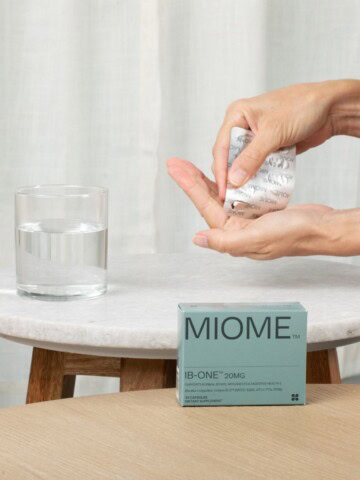
- For certain constipation patterns e.g., MIOME IB-ONE
- In specific women’s health concerns
- When guided by strain-specific evidence
The key point is that probiotics should always be matched to the problem, not taken randomly.
Women’s Health: There is growing evidence to support the use of specific probiotic strains in areas such as vaginal and urinary health. In these cases, strain selection matters far more than brand popularity.
This is one area where probiotics can be very useful when chosen correctly.
Constipation: For clients struggling with constipation, I often look for strains that have been studied specifically for bowel regularity. Miome is one product I like in this context because it is strain-specific and designed with this outcome in mind.
After Antibiotics: After antibiotics, the gut microbiome can be disrupted. In these cases, I may recommend a targeted probiotic such as Smart Strains, depending on the individual situation and symptoms.
You can find the probiotic supplements I personally like and recommend on my ShopMy page here.
Save This Recipe! 💌
Iron Supplements
Iron is one of the most important supplements when it is needed, and one of the least appropriate supplements when it is not.
Low iron levels can affect energy, concentration, exercise performance, fertility, and overall wellbeing. But excess iron can also cause harm, which is why I never recommend taking iron “just in case.”
Best Type
If iron supplementation is needed, gentler forms are usually better tolerated, such as:
- Ferrous bisglycinate
- Ferrous fumarate
Traditional ferrous sulfate is effective, but it is more likely to cause constipation, nausea, and stomach upset.
There is no single best form for everyone. Tolerance, dose, and consistency matter more than the brand.
How to Take It
I only recommend iron supplementation when a healthcare professional has confirmed deficiency, as iron can contribute to constipation and digestive side effects when taken unnecessarily.
Most iron supplements are best taken on an empty stomach, ideally with a vitamin C–containing food or drink to support absorption.
However, if this upsets your stomach, it is absolutely fine to take iron with food.
To improve absorption, try to avoid taking iron alongside:
- Milk
- Calcium supplements
- Antacids
- Tea or coffee
These can interfere with how well iron is absorbed.
When I Recommend Iron
I may recommend iron supplementation in situations such as:
- Low ferritin or iron deficiency on blood tests
- Heavy menstrual bleeding
- Pregnancy or preconception
- Certain digestive conditions affecting absorption
- Endurance athletes with documented low iron
In these cases, iron supplementation can make a significant difference to quality of life.
When I Do Not Recommend Iron
I do not recommend iron supplementation without blood work, when someone has hemochromatosis or if they are displaying symptoms of iron overload.
Taking iron when levels are normal does not improve energy and can increase digestive side effects and oxidative stress.
You can find the iron supplements I personally like and recommend on my ShopMy page here.
Psyllium Husk (Fiber Supplement)
Psyllium is a unique type of soluble, water-loving fiber that behaves differently from many other fibers in the gut.
Unlike most fibers, psyllium is only partially fermented by gut bacteria. This gives it a rare dual effect: it can help firm up loose stools while also softening hard stools. Because of this, it can be helpful for both constipation and IBS-related diarrhea.
It may also improve symptoms such as incomplete evacuation, where you feel like you haven’t fully emptied your bowels after a bowel movement.
Best Type
I recommend psyllium husk rather than psyllium powder where possible, as many people find it easier to tolerate and mix.
Look for a product that contains pure psyllium with no added sweeteners or fillers.
How to Take It
Start low and increase gradually:
- Begin with ½ tablespoon (around 3 g) daily
- If well tolerated, increase to 1 tablespoon per day after one week
- You can slowly build up to a maximum of 3 tablespoons per day, if needed
For every tablespoon of psyllium, drink an extra 150 ml of fluid to prevent discomfort.
Because psyllium forms a thick gel when mixed with cold liquids, it’s often easiest to take it with warm foods such as porridge or soup.
Who It May Help
Psyllium may be useful for:
- Constipation
- IBS-related diarrhea
- Mixed bowel pattern IBS
- Feelings of incomplete bowel emptying
As with all fiber supplements, it should be introduced slowly to minimize bloating or gas.
You can find the psyllium supplements I personally like and recommend on my ShopMy page here.
Nice To Have Supplements
Creatine
Creatine is one of the most researched supplements in the world, yet it’s still misunderstood, especially among women.
It is not a steroid.
It does not cause fat gain.
And it is not just for bodybuilders.
Creatine supports strength, power, muscle performance, and increasingly, brain health. That’s why I consider it a nice-to-have supplement rather than an essential one.
If you want a deeper breakdown, I’ve written a full post on creatine for women and beginners that you can read here.
Best Type of Creatine
The form I recommend is creatine monohydrate.
Even better, look for a product that carries the Creapure® logo. Creapure is a patented, pharmaceutical-grade creatine monohydrate made in Germany and is one of the purest and most tested forms available.
How to Take It
The standard dose is 3–5 g per day.
There is no need to load.
There is no need to cycle.
You can take it at any time of day, with or without food. Consistency matters more than timing.
Creatine works by gradually increasing muscle creatine stores over time, so think of it as a long-term support supplement rather than something you “feel” immediately.
Who It May Benefit Most
Creatine can be especially helpful for:
- Women strength training
- Peri-menopause and menopause
- People wanting to protect muscle and strength with age
- Those interested in brain health support
It is not essential, but it is one of the few supplements where the evidence is genuinely strong.
You can find the creatine supplements I personally like and recommend on my ShopMy page here.
Collagen
Collagen is one of the most talked-about supplements in recent years, especially for skin, hair, nails, and joints. You can read my full deep-dive on this topic here: Do Collagen Supplements Work?
In short, the evidence is promising, but the results are modest.
Some studies show small improvements in skin elasticity and hydration after 8 to 12 weeks of consistent use. There is also emerging evidence for joint comfort in mild osteoarthritis and potential support for bone health in postmenopausal women.
But collagen is not a miracle supplement. It does not reverse aging, rebuild cartilage dramatically, or replace strength training.
So my take as a dietitian is this: if it fits your budget and you’re curious to try it, I’m supportive of that. But it’s not something I’m shouting about from the rooftops just yet.
If your main goal is skin health, I’d still prioritize overall nutrition first, including adequate protein, vitamin C, zinc, and healthy fats (you can read more about that in my skin nutrition post here).
Collagen can contribute to overall protein intake, but it is not a complete protein and should not replace higher-quality sources such as dairy, eggs, meat, fish, or soy.
Best Type
If you decide collagen might be worth trying, look for:
- Hydrolyzed collagen peptides (the most studied form)
- Bovine or marine sources
- A dose of at least 2.5 to 5 grams daily for skin, or 5 to 10 grams for joint support
How to Take It
Collagen can be taken at any time of day. For skin and bone health, consistency matters more than timing. Vitamin C supports collagen synthesis, so taking it alongside fruit or a vitamin C–rich food is sensible.
You can find the collagen supplements I personally like and recommend on my ShopMy page here.
Supplements I Rarely Recommend
Vitamin C
Vitamin C is one of the most commonly supplemented nutrients, but for most people, supplementation is not necessary.
Vitamin C is very easy to obtain from food. For example, just half a cup of steamed broccoli provides over 80% of daily vitamin C needs, not to mention citrus fruits, berries, peppers, and tomatoes.
Best Type of Vitamin C
If vitamin C is used, a simple ascorbic acid or buffered form is perfectly sufficient.
How to Take It
Vitamin C is water-soluble, so timing with food is not essential. However, high doses are a very common cause of gut upset, including bloating and diarrhea.
For this reason, I generally advise against high-dose vitamin C supplementation unless there is a clear clinical reason to use it.
What the Evidence Says
Despite popular belief, the evidence that vitamin C supplements prevent colds or flu is minimal. They may slightly reduce the duration of symptoms in some people, but they do not reliably prevent illness.
In athletes and people training at very high intensities, vitamin C supplementation may have a role.
Heavy training increases oxidative stress and can temporarily suppress immune function. In these situations, moderate vitamin C supplementation may help reduce the risk or duration of upper respiratory infections.
Melatonin
There is evidence that oral melatonin can help people fall asleep faster and slightly improve overall sleep quality, particularly for those struggling with disrupted sleep schedules, stress, or jet lag.
However, the reason I don't typically recommend melatonin is because I prefer people to focus on improving their sleep hygiene first, as this is what will make the biggest difference. Light exposure is still the strongest regulator of your body’s natural melatonin production. Bright lights in the evening (especially from phones, tablets, and laptops) can significantly reduce melatonin release, even if you take a supplement.
The reassuring news is that short-term melatonin use, in studies lasting from around one week to one month, do not appear to suppress your body’s own melatonin production in healthy adults.
My biggest concern with melatonin supplements is that research has shown that many don’t contain the amount listed on the label. Some contain far less than stated (which may make them ineffective), while others contain much more (which can increase the risk of side effects like grogginess or vivid dreams). This is why choosing a trusted, third-party tested supplement is important.
Melatonin is not authorized for over-the-counter (OTC) sale in the United Kingdom, most of the European Union, and Japan. In these places, it is classified as a prescription-only medicine.
If you do choose to take a melatonin supplement, I recommend a low dose of 1-3mg and try to avoid taking it for long periods of time. I like the Nordic Naturals Zero Sugar Melatonin gummies. These are third party tested and provide 1.5mg per gummy.
Supplements for Certain Conditions/Life Stages
Fertility Supplements
When it comes to fertility, supplements should never be taken randomly. Needs can vary hugely depending on cycle health, iron status, iodine intake, vitamin D levels, and overall nutrition.
However this is one area where targeted, evidence-based supplementation can be very helpful when chosen correctly. I’ve broken this down in much more detail in my full guide on fertility supplements and fertility supplements for men.
Rather than taking everything “just in case,” the goal with fertility is always to support the body with what it actually needs.
Cholesterol Lowering Supplements
When it comes to cholesterol, supplements should always support lifestyle changes, not replace them. For most people, improving fiber intake, food quality, movement, and overall consistency will have a far bigger impact than any capsule.
That said, certain supplements can be helpful in specific situations, particularly for LDL cholesterol. I’ve explained which ones actually have evidence behind them in my full guide on cholesterol-lowering supplements.
The goal is never perfection, but steady, sustainable improvements that protect long-term heart health.
Comments
No Comments