


Over the years in my nutrition practice, I’ve had more conversations about constipation than almost any other topic. And interestingly, it’s almost always women who are the ones quietly struggling with it.
There are several reasons women tend to experience constipation more often, from hormonal changes to differences in gut motility. But the important thing to know is this: you don’t have to just put up with it. There are solutions, and it’s something we should feel comfortable talking about.
One of the questions I get asked quite a lot is whether probiotic supplements can actually help. The gut health supplement space is full of products making big promises, but it can be difficult to know which ones are actually backed by good evidence.
So in this article, I’m taking a closer look at Miome’s IB-ONE probiotic to see what’s inside it, what the research says, and whether it’s something I would realistically recommend.
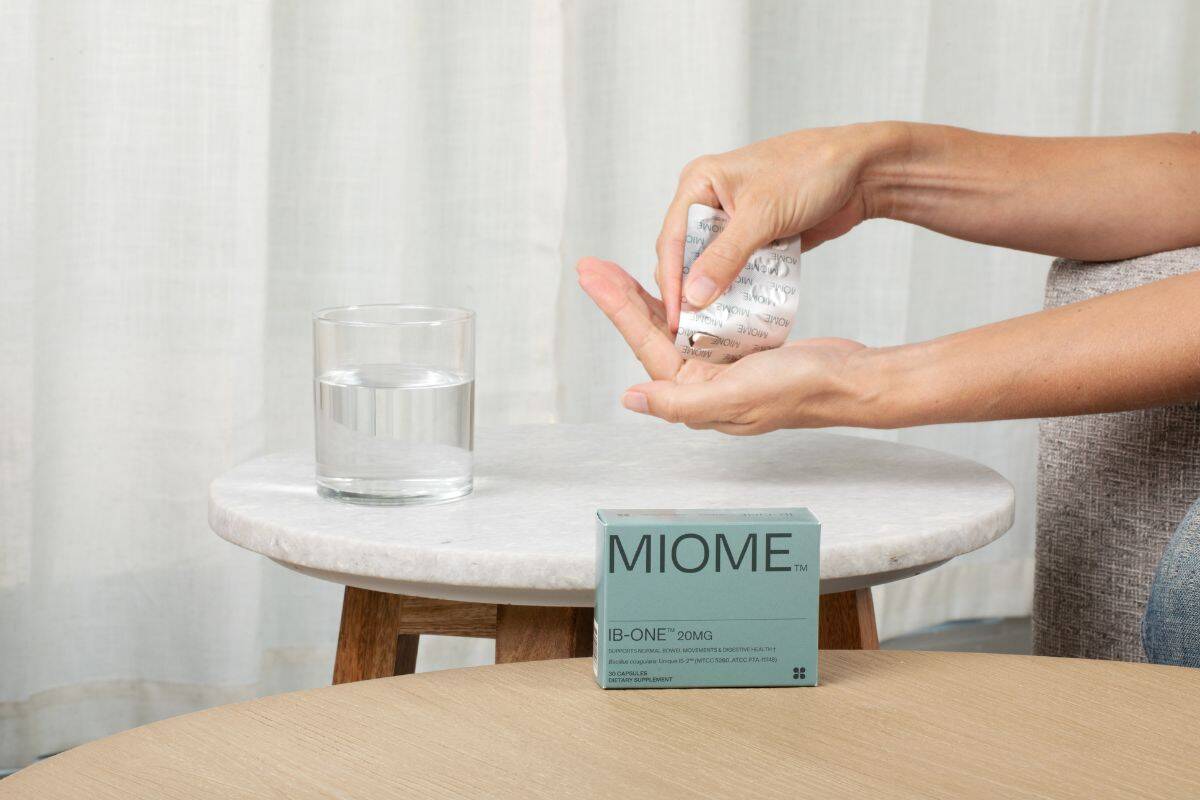
This article is for informational purposes only and does not constitute medical advice. Please consult your doctor or healthcare provider before starting any new supplement, especially if you have a diagnosed health condition or take medication.
Jump to:
- Why are so many people struggling with constipation?
- Why most probiotics don't work
- What the research actually says about probiotics for constipation
- MIOME IB-ONE: What it is and who it's for
- MIOME IB-PRO
- IB-ONE vs IB-PRO: Which should you choose?
- Why shelf-stability matters
- What to expect: timeline and managing expectations
- A note for women specifically
- Is MIOME worth the money?
- More supplement articles you might enjoy
- Summary & key takeaways
- 💬 Comments
Why are so many people struggling with constipation?
Constipation is incredibly common. Research estimates it affects around 15% of adults globally, with women being disproportionately affected at nearly every life stage, from hormonal fluctuations during the menstrual cycle to pregnancy, postpartum changes, and perimenopause.
It's not just about going less often. Constipation can mean straining, feeling like you never fully empty, hard or uncomfortable stools, bloating, and a general sense of heaviness that drains your energy and mood. For many people, it is a daily issue that quietly affects their quality of life.
The usual advice; drink more water, eat more fiber and move your body is all valid and genuinely helpful. But for a lot of people, especially those with underlying gut issues like irritable bowel syndrome (IBS), these changes alone are not enough.
That's where probiotics come in. But here is the problem: most of them don't work.
Why most probiotics don't work
This is probably the most important thing I can share in this article, and it's something I explain regularly in my nutrition practice.
When a probiotic doesn't work for you, it's rarely because probiotics don't work in general. It's almost always because you took the wrong strain for your specific problem.
Here's what I mean. The word "probiotic" is a broad term. It covers thousands of different bacterial strains, and each one has different effects in the body. What works for immune support won't necessarily work for constipation. What helps with diarrhea may do nothing for bloating. Probiotic benefits are strain-specific, meaning they depend entirely on which bacteria you're taking and what that specific strain has been studied for.
Most popular probiotics are marketed broadly for "gut health," "digestion," or "immunity." They are formulated with strains that are easy and cheap to produce, not necessarily with strains that have been tested in clinical trials for constipation specifically.
This is why taking a random probiotic from a pharmacy shelf and expecting it to help with constipation is a bit like taking a painkiller and hoping it also fixes your blood pressure. Different tools for different jobs.
When I evaluate any probiotic as a dietitian, the first question I ask is: has this specific strain been tested in a well-designed clinical trial for the exact condition being treated? If the answer is no, I won't be recommending it.
What the research actually says about probiotics for constipation
There is genuinely good evidence that certain probiotic strains can help with constipation. A well-cited systematic review and meta-analysis published in the American Journal of Clinical Nutrition found that probiotics, on average, increased bowel movement frequency and improved stool consistency in people with constipation.
The key word there is "certain." Not all probiotics produced these results, only specific strains did.
Research consistently highlights a handful of strains for constipation support, and one of the most studied is Bacillus coagulans Unique IS-2 (MTCC 5260), the strain at the core of MIOME's products.
A 2020 double-blind, randomised controlled trial (the gold standard in research design) involving 100 participants found that this specific strain produced some genuinely impressive outcomes:
- 98% of participants achieved normal stool consistency after 29 days
- Bowel movement frequency increased from around 1 per week to approximately 6 per week
- Painful defecation reduced by 74%
- Abdominal discomfort reduced by 84%
- The sensation of incomplete evacuation reduced by 64%
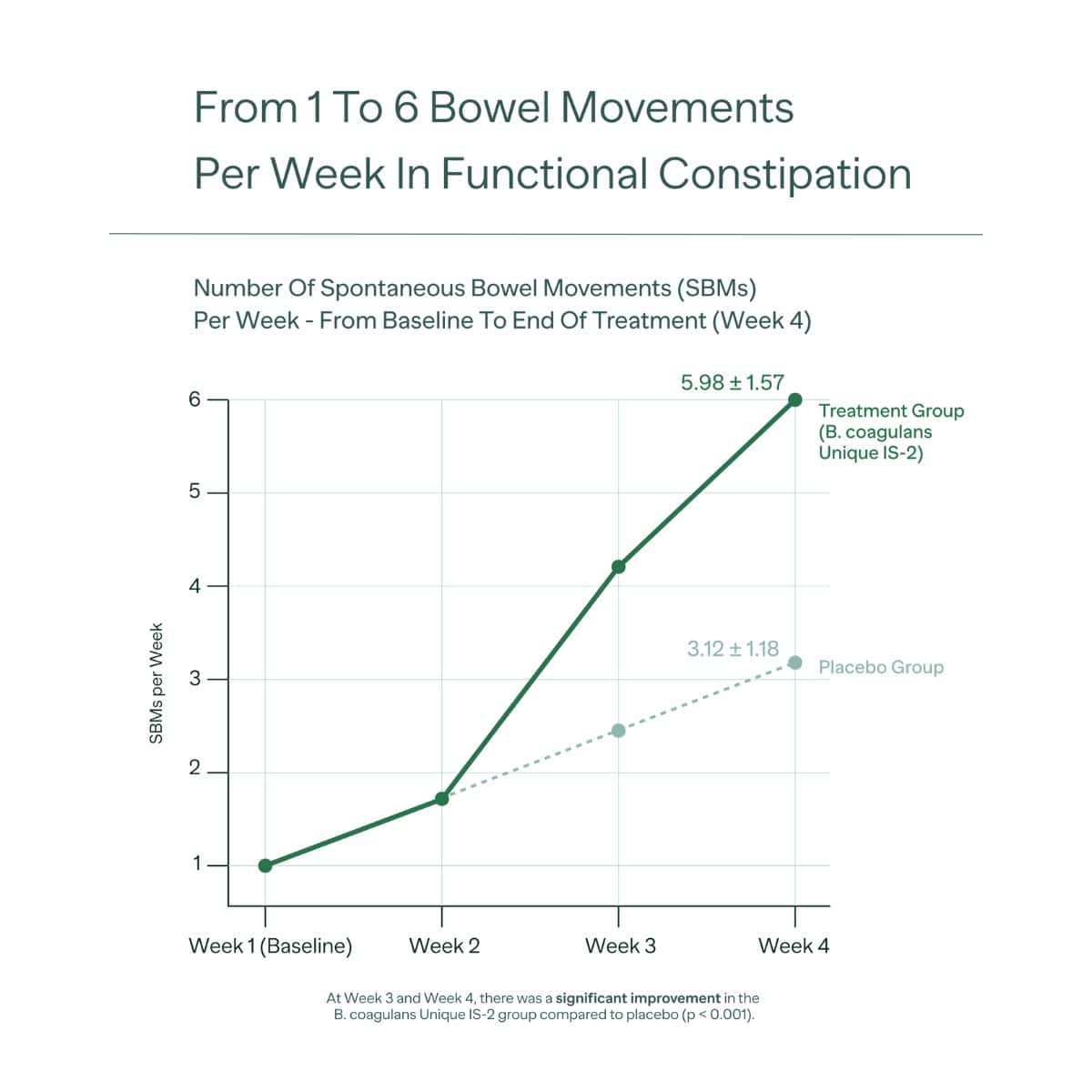
Those are meaningful results, not just modest statistical improvements.
This same strain has since been evaluated in multiple systematic reviews and network meta-analyses, and it consistently ranks among the most effective probiotic strains for both constipation and IBS-related symptoms. It's also listed in the US Probiotic Guide, a clinician resource used by healthcare professionals to identify evidence-based probiotic recommendations.
That's the research behind MIOME's formulation. Now let's look at the products themselves.
Save This Recipe! 💌
MIOME IB-ONE: What it is and who it's for
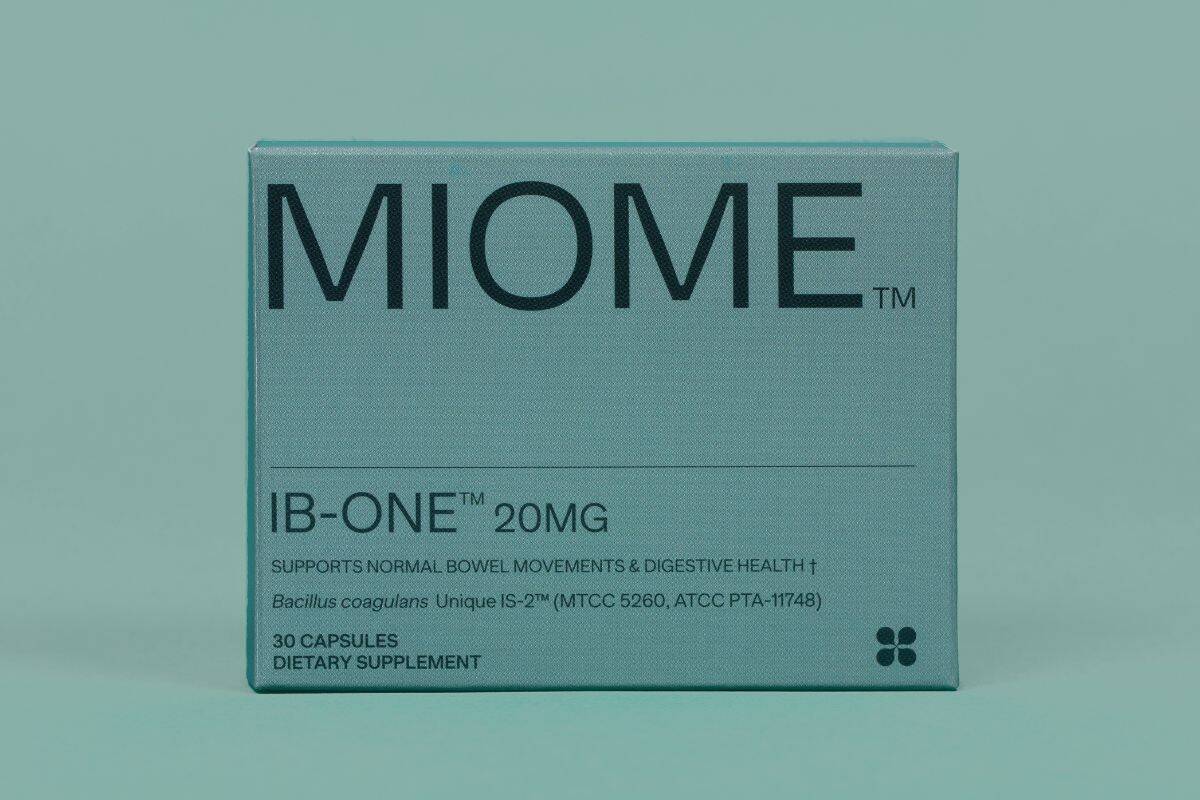
MIOME IB-ONE is a single-strain probiotic containing Bacillus coagulans Unique IS-2 (MTCC 5260) at 2 billion CFU per capsule. The dose matches what was used in clinical research.
What's in it: The capsule contains the probiotic strain, microcrystalline cellulose, vegetarian capsule (cellulose, water), vegetable stearate, and silicon dioxide. That's it. No unnecessary fillers, no hidden ingredients.
Why this matters: MIOME deliberately kept the formulation clean and simple. Many probiotics contain additives like inulin (a type of fibre used as a filler or prebiotic) that can actually trigger bloating, gas, and digestive discomfort in people who are sensitive to FODMAPs. If you have IBS or a sensitive gut, this kind of hidden ingredient can make your symptoms worse, not better.
Who IB-ONE is best for: This is the product I would point someone toward first if their main concern is constipation and irregular bowel movements. It's also worth considering for anyone with IBS-C (the constipation-dominant type of IBS), or anyone who has tried other probiotics without success.
Practical details: One capsule per day, any time of day, with or without food. No refrigeration.
Cost and where to buy: IB-ONE is available directly through the MIOME website. You can use my code MARIA20 at checkout for a discount. It's also available on Amazon. MIOME offers an 8-week money-back guarantee, which I appreciate as it reflects genuine confidence in the product and removes the financial risk of trying something new.
MIOME IB-PRO
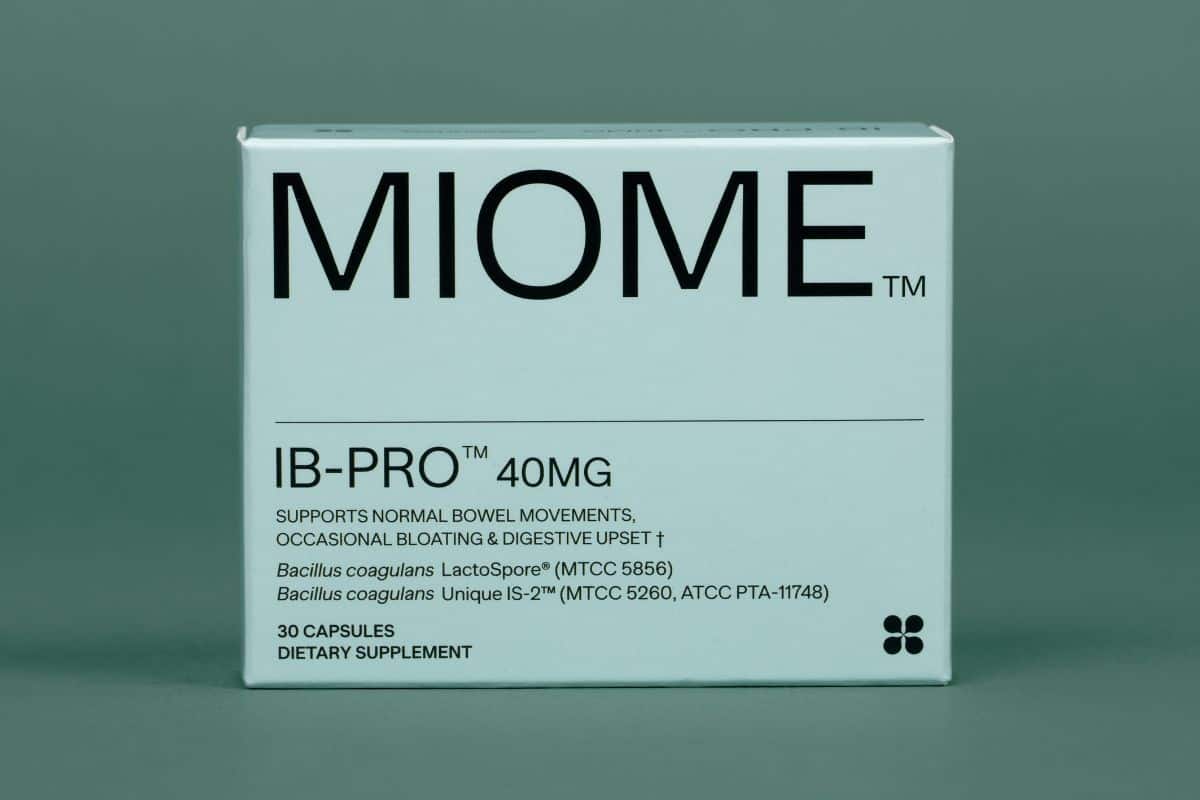
IB-PRO is MIOME's dual-strain product. It contains the same Unique IS-2 strain found in IB-ONE, plus a second clinically-studied strain: Bacillus coagulans LactoSpore (MTCC 5856).
The addition of LactoSpore is specifically targeted at bloating, gas, and digestive upset. A clinical study (Majeed et al., 2023) found this strain improved digestive symptom scores (including reflux, constipation, and stomach discomfort) by 84.1% compared to 33.65% in the placebo group.
Who IB-PRO is best for: This is the upgrade option for anyone who experiences constipation alongside significant bloating, gas, or general digestive upset. Many women find that constipation and bloating go hand-in-hand, particularly around their menstrual cycle or during hormonal shifts. If that sounds familiar, IB-PRO may be worth considering over IB-ONE.
IB-ONE vs IB-PRO: Which should you choose?
Here's a simple way to think about it:
Choose IB-ONE if: Your main issue is constipation and irregular bowel movements, and bloating is not a major concern for you.
Choose IB-PRO if: You experience constipation alongside noticeable bloating, gas, or digestive discomfort. This is very common, especially for women with IBS or hormonal-related gut symptoms.
Both products contain the same core Unique IS-2 strain, and both come with MIOME's 8-week guarantee.
Why shelf-stability matters
Bacillus coagulans strains are spore-forming bacteria. This means they form a protective shell around themselves that allows them to survive stomach acid and reach the gut alive - which is where they need to be to have any effect.
Most probiotic bacteria (like Lactobacillus and Bifidobacterium strains) are far more fragile. They need refrigeration to stay viable, they can be killed off by stomach acid during digestion, and their survival rates can vary significantly depending on storage conditions.
MIOME's products are shelf-stable and do not need refrigeration. The blister foil packaging protects each capsule from light, moisture, and oxygen. This means what is on the label is actually what is making it to your gut, which cannot always be said for every probiotic on the market!
MIOME also has their products third-party tested for allergens, heavy metals (lead, mercury, arsenic), and microbiological contaminants, and they publish the results.
What to expect: timeline and managing expectations
Probiotics are not laxatives. They don't produce results overnight. They work gradually by supporting a healthier balance of bacteria in your gut, which in turn improves gut motility and stool consistency over time.
Based on the clinical data for Unique IS-2, most people begin to notice changes within 2 to 4 weeks of daily use. The strongest improvements in the studies were seen by week 4.
There are a couple of things to keep in mind.
- First, some people experience a brief adjustment period when starting a new probiotic, mild bloating or a change in bowel habits in the first few days is normal as your gut adapts. This usually settles quickly.
- Second, probiotics work best when other gut basics are also in place. That means getting enough fiber in your diet, staying hydrated, and moving your body regularly. If you're looking for a fiber-rich breakfast to support your gut while you add in a probiotic, my high-protein overnight oats or blackberry baked oatmeal are one of the easiest and most satisfying options.
A note for women specifically
I want to come back to the women and constipation piece, because I don't think it gets enough attention.
Constipation is more than twice as common in women as in men. Hormonal fluctuations play a significant role, progesterone, which rises in the second half of the menstrual cycle, can slow gut motility. This is why many women notice their digestion changes at different points in their cycle.
Pregnancy, postpartum changes, thyroid conditions, and conditions like PCOS and endometriosis are all associated with higher rates of constipation and gut symptoms. If you are living with PCOS, for example, gut health is an important but often overlooked part of the picture. I've written about this in my 7-day PCOS diet plan, which includes a free PDF download.
Iron supplements, which many women take for anaemia, are also a very common cause of constipation. If you're taking iron and struggling with your gut, this may be a factor worth discussing with your doctor.All of this is to say: if you are a woman dealing with constipation, your gut symptoms are not random or "just something you deal with." There are real, addressable reasons behind them and targeted support like a clinically-studied probiotic may genuinely help.
Is MIOME worth the money?
I want to address this directly, because I know most people have already spent money on supplements that didn't work.
My honest answer is: for the right person, yes.
MIOME's formulation is backed by specific, well-designed clinical trials. The strain has been independently tested, independently reviewed, and independently ranked. The formulation is clean - no unnecessary fillers, no FODMAP-triggering additives, no ingredients that could backfire for people with sensitive guts.
The 8-week money-back guarantee removes the main financial risk. You're not committing to a product you can't return if it doesn't work for you.
Is it a guaranteed fix? No. Individual gut microbiomes vary, and no supplement works for everyone. But compared to most of what I see on pharmacy shelves, MIOME is one of the few probiotic products I would genuinely point my clients toward first when constipation is the primary concern.
More supplement articles you might enjoy
- Best Creatine Supplements For Women - A Dietitians Picks
- When A Magnesium Supplement May Be of Benefit
- Supplements I Recommend As A Dietitian in 2026 (& the ones I don't)
- The Best & WORST Supplements to Lower Cholesterol | A Dietitian's Recommendations
- Is Collagen Worth It in 2026? A Registered Dietitian Reviews the Latest Evidence
Summary & key takeaways
- Constipation affects a huge number of people, and women are disproportionately affected due to hormonal, physiological, and lifestyle factors.
- Most probiotics don't help constipation because they don't contain the right strain - probiotic benefits are strain-specific.
- MIOME IB-ONE contains Bacillus coagulans Unique IS-2, one of the most extensively studied probiotic strains for constipation and IBS symptoms.
- MIOME IB-PRO adds a second strain (LactoSpore) for people who experience constipation alongside bloating and digestive upset.
- Both products are shelf-stable, third-party tested, free from common allergens and FODMAP-triggering fillers, and backed by an 8-week money-back guarantee.
- Expect to see results within 2 to 4 weeks of daily use, and support the process with adequate fiber, hydration, and movement.
- Use code MARIA20 at checkout for a discount.
If you have tried MIOME or are thinking about giving it a go, I'd love to hear how you get on. Let me know in the comments below - I read every single one.

Comments
No Comments