


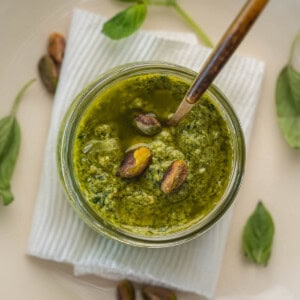
This easy pistachio pesto recipe swaps pine nuts for pistachios, giving you a creamy, slightly sweet twist on the classic basil pesto. Perfect for pesto pasta, sandwiches, or as a dip.

A Quick Look At This Recipe
- ✅ Recipe Name: Pistachio Pesto
- 🕒 Ready In: ~10 minutes
- 👪 Serves: 14 tablespoons
- 🍽 Calories: ~74
- 🥣 Main Ingredients: Pistachios, garlic, basil, parmesan, lemon juice & olive oil
- 📖 Dietary Info: Gluten-free
- ⭐ Why You'll Love It: Ready in minutes, made with fewer, simpler ingredients than store-bought pesto, and versatile enough for pasta, sandwiches, dips, or dressings.
I love pistachios and I love pesto, so I thought why not combine the two? Plus, most of us are way more likely to have a bag of pistachios in the cupboard than pine nuts, so it makes homemade pesto a whole lot easier (no extra trip to the store required!). And as a dietitian, while I’m not here to hate on traditional pine nuts, pistachios actually bring a little extra to the table nutrition-wise.
This recipe is simple, fast and versatile. If your looking for more pistachio based recipes I recommend my feta pistachio dip and if you want something spreadable that is also high in protein check out this cottage cheese hummus recipe.
Jump to:
- A Quick Look At This Recipe
- What is Pistachio Pesto?
- Is This A Low Calorie Pesto?
- Key Ingredients
- Substitutions
- How To Make This Recipe
- Equipment
- Storage
- Serving Suggestions
- Common Mistakes to Avoid
- How to Enjoy Pesto in a Balanced Meal
- Health Benefits of Pistachios
- Nutrition Notes
- FAQ
- Related
- Want to Learn About Nutrition?
- 📖 The Recipe
- 📖 Recipe
- 💬 Comments
- 💬 Comments
What is Pistachio Pesto?
Pistachio pesto is a variation of traditional Italian basil pesto where pistachios replace pine nuts. The method stays the same using basil, garlic, Parmesan, olive oil, and lemon blended into a smooth, herby sauce. The pistachios give it a nuttier, slightly sweeter flavor and a unique creamy consistency.
This style of pesto is popular in Sicily, where pistachios are grown. In some regional versions, ricotta cheese is added for an even creamier finish.
Is This A Low Calorie Pesto?
Most store-bought pestos sit in the 60–80 calorie per tablespoon range, and this homemade pistachio pesto is right there too at about 74 calories per tablespoon. That’s because pesto is naturally made with ingredients like olive oil, nuts, and cheese, all nutritious, but also calorie-dense.
If you’re looking for ways to lighten it up, you don’t need to miss out on the flavor. One of my favorite tricks is to mix the pesto with plain Greek yogurt. Try using one tablespoon of pesto with one tablespoon of yogurt. You’ll cut the calories nearly in half, add a little protein, and get an extra creamy texture that works beautifully in pasta sauces, dips, or even as a spread.
This way you can enjoy all the herby, nutty goodness of pesto while making it fit more easily into your everyday meals.
Key Ingredients
The complete ingredient list with measurements can be found in the recipe card below.

- Pistachios – You can use either salted or unsalted pistachios. If using salted, reduce added salt. Roasted gives a deeper flavor, raw keeps it fresh-tasting. Buy shelled pistachios to save you a tonne of time!
- Olive Oil – A good extra virgin olive oil makes a huge difference in flavor.
- Fresh Basil – Look for vibrant, bright green leaves. Avoid bruised or wilted leaves.
- Lemon Juice – Freshly squeezed, if possible. It adds brightness and helps prevent browning.
- Parmesan Cheese – Freshly grated if possible. When you grate Parmesan yourself, you’re exposing all those flavorful fats and proteins right before eating. Pre-grated Parmesan has been sitting around, so it loses some of that sharp, nutty punch.
- Garlic – Fresh garlic gives the best flavor. Adjust to taste if you like it more mellow.
Substitutions
Here are some tips to help you adjust the recipe to suit your individual dietary needs and preferences
- Dairy free or vegan - Replace Parmesan with nutritional yeast or a vegan cheese alternative.
- Nut-free - Try sunflower seeds or pumpkin seeds instead of pistachios.
- Lower in calories - Use less oil and balance it with a splash of water or lemon juice. You’ll still get that fresh, herby flavor without as many calories.
- Higher in protein - Stir the pesto into Greek yogurt to make a creamy, protein-rich sauce or dip. Perfect with veggies, on wraps, or even dolloped on grilled chicken or fish.
- Gluten free → Most pesto is naturally gluten free, but just be mindful of what you serve it with—pair it with gluten free pasta, crackers, or bread.
- Vegetarian → Traditional Parmesan cheese is made with animal rennet. To keep this fully vegetarian, swap for a rennet-free Parmesan or nutritional yeast.
Let me know in the comments if you do make any of these adjustments, I'd love to hear how it worked out! 💛
How To Make This Recipe
Below are the simple steps for how to make this homemade healthy pesto with visuals I hope are helpful! Don't forget to check out the recipe card at the bottom for the full recipe.

Step 1:
Blend nuts and garlic in a food processor or high speed blender. Pulse until finely chopped.

- Add basil and parmesan. Pulse a few times to combine.

- Add lemon juice and pulse again.

- Slowly drizzle in olive oil and continue to process or blend until smooth.
- Taste and adjust by adding salt and pepper as needed. If too thick, thin with a little water.
Equipment
Food processor or a high power blender - I LOVE my ninja foodi and couldn't recommend it enough. Its a blender and food processor all in one.
Storage
- Fridge: Store in a sealed jar with a thin layer of olive oil on top for 3–5 days.
- Freezer: Freeze in ice cube trays, then transfer to a freezer bag for up to 3 months. Defrost a cube as needed for quick weeknight dinners.
Serving Suggestions
The possibilities with this pesto are endless, but here are some of my favorite ways to use it:
- Pesto Pasta Bowl – Toss pistachio pesto with chickpea or lentil pasta for extra protein and fiber. Then add fresh mozzarella, olives, tomatoes, or whatever veggies you have on hand. For an extra creamy twist, stir in 1–2 tablespoons of Greek yogurt before mixing.
- Pesto Eggs – A fun twist on fried eggs! Instead of cooking your egg in oil, spread a spoonful of pesto in the pan and crack the egg right on top. The pesto crisps up around the edges and adds so much flavor.
- Sandwich or Wrap Spread – Swap out mayo or butter for pesto on sandwiches and wraps. It pairs perfectly with chicken, turkey, or roasted veggies.
- Drizzle Over Roasted Veggies – A spoonful of pesto can instantly elevate simple roasted veggies. Try it with zucchini, carrots, or potatoes.
- Pesto Pizza Base – Use pistachio pesto instead of tomato sauce for a quick pizza or flatbread. Top with cheese, tomatoes, and fresh basil.
Save This Recipe! 💌
Common Mistakes to Avoid
Over-blending: Can make the pesto bitter. Pulse in short bursts.
Using low-quality oil: Extra virgin olive oil gives the best flavor.
Not tasting as you go: Always adjust lemon, cheese, and salt to your preference.
Skipping the drizzle: Adding olive oil slowly helps the sauce emulsify.
How to Enjoy Pesto in a Balanced Meal
Think of pesto as a flavor booster, not the main event. Because olive oil is one of the main ingredients, pesto counts mainly as a fat source in your meal.
A typical serving is about 1–2 tablespoons, but the right amount depends on your hunger levels and what else you’re eating that day. To build a balanced plate, try pairing pesto with:
- Protein → chicken, salmon, shrimp, beans, or tofu
- Carbs → wholegrain pasta, quinoa, or sourdough bread
- Veggies → roasted vegetables, zucchini noodles, or a big leafy salad
This way, you get all the food groups in, and the pesto ties everything together with a punch of flavor.

Health Benefits of Pistachios
Pistachios are one of the lowest-calorie nuts, with about 162 calories per 1 ounce serving.. that’s roughly 49 pistachios! Interestingly, research shows that the body doesn’t absorb every calorie from nuts, and for pistachios it may be closer to 153 calories per ounce.
If you buy them in the shell, there’s another added bonus: the act of de-shelling naturally slows you down, which can help with mindful eating and portion control.
Like other nuts, pistachios provide a mix of heart-healthy fats, fiber, and plant compounds. Research suggests that regularly including nuts like pistachios in your diet may help support healthy cholesterol levels and overall heart health—which is why they made my list of my Top 4 Cholesterol-Lowering Foods.
In practice, when I work with clients during my online consultations, I often find people are a bit hesitant about eating nuts because they worry about weight gain. But in reality, studies show that eating nuts in moderation is not linked to weight gain and in some cases, it may even be associated with better weight management. That’s because nuts like pistachios are satisfying, high in protein and fiber, and can help keep you fuller for longer, which may reduce the likelihood of overeating later on.
So instead of skipping nuts, I encourage people to enjoy a small handful daily as part of a balanced diet. Pistachios are one of the easiest (and tastiest!) ways to do that.
If you’d like to read more, you can visit AmericanPistachios.org for additional resources on pistachio nutrition.
Nutrition Notes
Each serving of pistachio pesto contains a balance of healthy fats, some protein, and vitamins from basil and lemon. Because pesto is concentrated, a few spoonfuls go a long way. It’s a smart way to add flavor without needing large amounts.
Nutrition information was calculated using Cronometer, a nutrition tracking tool that uses the USDA FoodData Central database and verified brand data for accuracy. Estimates are based on the exact ingredients and amounts listed, so your numbers may vary slightly depending on the brands and measurements you use.

FAQ
Yes. Swap the Parmesan for nutritional yeast for a dairy-free option.
You can use parsley, cilantro, or spinach, though the flavor will change.
Pecorino Romano, Grana Padano, or a vegan cheese alternative all work.
You can reduce oil and thin with water or broth, but olive oil is key for flavor and texture.


Want to Learn About Nutrition?
Here are some nutrition education articles from a dietitian! And if you have any questions, feel free to reach out - I'm here to help.

📖 The Recipe
📖 Recipe
Easy Pistachio Pesto Recipe
Equipment
Ingredients
- 40 grams ¼ cup shelled pistachios
- 70 milliliters ⅓ cup extra virgin olive oil
- 2 handfuls fresh basil leaves about 30g
- Juice of 1 lemon about 2 tablespoons or 30mls
- 30 grams ⅓ cup grated Parmesan cheese
- 1 clove garlic
Instructions
- Add pistachios and garlic to a food processor. Pulse until finely chopped.40 grams ¼ cup shelled pistachios, 1 clove garlic
- Add basil and Parmesan. Pulse again.2 handfuls fresh basil leaves, 30 grams ⅓ cup grated Parmesan cheese
- Add lemon juice and pulse to combine.Juice of 1 lemon
- With the motor running, drizzle in olive oil until smooth.70 milliliters ⅓ cup extra virgin olive oil
- Taste and adjust with salt, pepper, or extra lemon.
Save This Recipe! 💌
Maria's Notes
- Storage: Keep in fridge 3–5 days or freeze in cubes up to 3 months.
- Tip: Thin with a splash of water if too thick.
- Serving Ideas: Toss with pasta, spread on sandwiches, or drizzle over roasted veggies.
Variations
- Swap pistachios for almonds or walnuts.
- Try lime juice instead of lemon for a tangy twist.
- For dairy-free, use nutritional yeast instead of Parmesan.


Comments
No Comments