

This easy Pesto Ricotta Pasta with Shrimp makes a quick and satisfying weeknight meal. The simple sauce of ricotta, pesto, and lemon juice coats wholewheat spaghetti, shrimp, and a bit of grated zucchini because as a dietitian, I’m always sneaking in extra veggies!
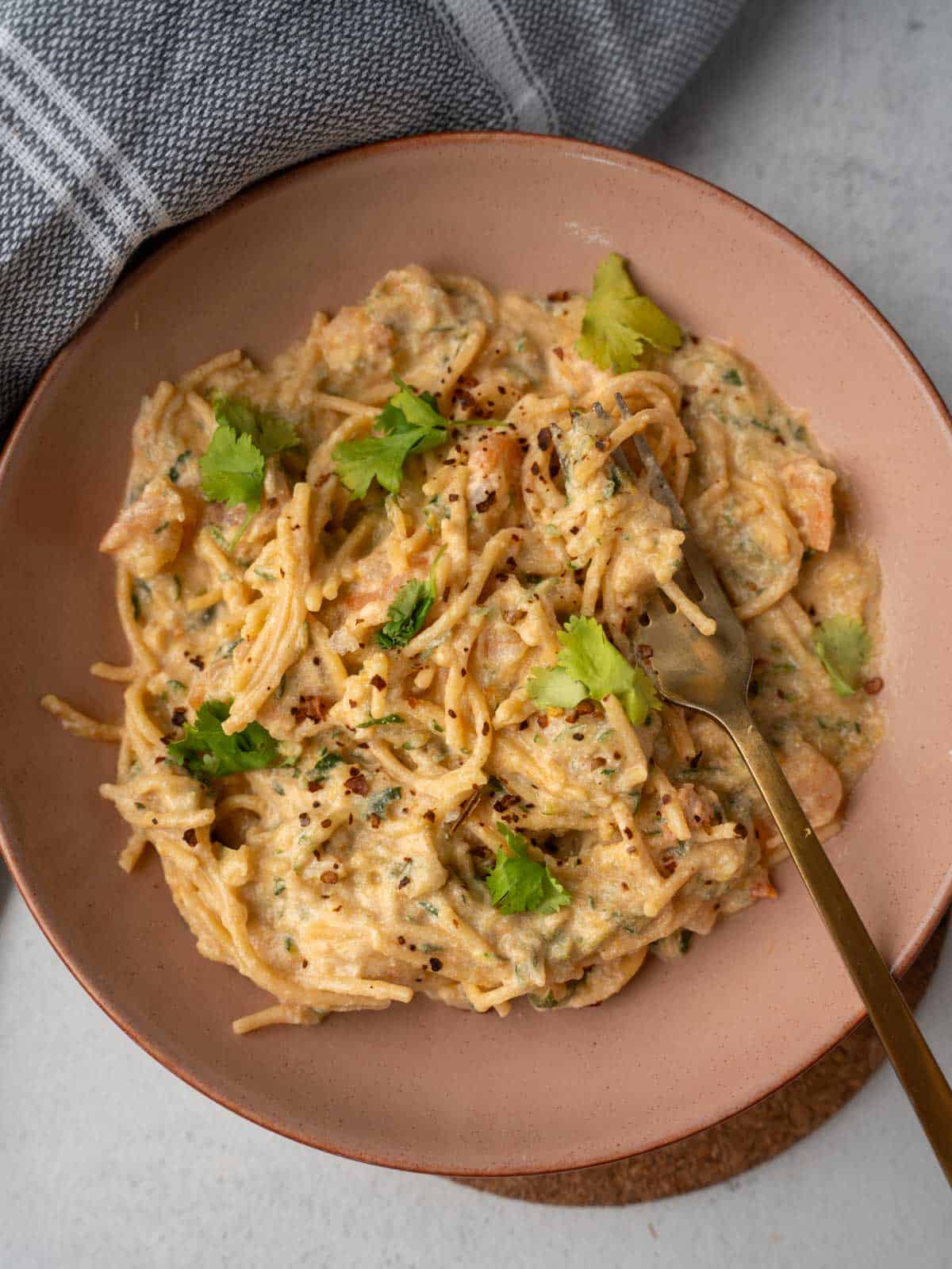
A Quick Look At This Recipe
- ✅ Recipe Name: Easy Pesto Ricotta Pasta with Shrimp
- 🕒 Ready In: ~5 minutes (prep) and ~20 minutes (cook)
- 👪 Serves: 2
- 🍽 Nutrition Info Per Serving: ~400 calories, 28g protein, 5g fiber (varies by specific ingredients)
- 🥣 Main Ingredients: Wholewheat spaghetti, shrimp, ricotta cheese, pesto, zucchini, garlic, lemon.
- ⭐ Why You'll Love It: It's incredibly creamy without using any heavy cream and it's a complete, balanced meal in one pan.
I often turn to pasta when I need a comforting dinner, and many of my online clients also frequently ask for healthy pasta dishes. Pasta has a bad rep in the health space but the truth is, pasta can absolutely fit into a balanced diet, it’s all about what you pair it with.
In this recipe, the combination of ricotta and pesto gives the sauce a velvety texture without needing cream, while the lemon brightens it all up. The grated zucchini melts into the sauce, adding a bit of extra fiber and volume, and the shrimp add protein to keep you feeling satisfied for hours. If you have kids, this is also a great dish for sneaking in veggies since the zucchini practically disappears into the sauce.
If you enjoy this recipe, you might also like my Roasted Red Pepper Pasta Sauce or my Cottage Cheese Pasta Sauce. Both are easy, high-protein options for busy weeknights that satisfy all pasta cravings!
Jump to:
- A Quick Look At This Recipe
- Why This Recipe Is Good for You (Nutrition Highlights)
- Key Ingredients
- Ingredient Substitutions
- Recipe Variations
- How To Make This Pesto Ricotta Pasta
- Expert Tips for Making This Recipe
- Storage
- Nutrition Notes
- FAQ
- Related
- Want to Learn About Nutrition?
- 📖 The Recipe
- 📖 Recipe
- Comments
- 💬 Comments
Why This Recipe Is Good for You (Nutrition Highlights)
- Shrimp: A fantastic source of lean protein that’s naturally low in fat and calories. Many people worry about shrimp because it contains dietary cholesterol, but research suggests that for most people, cholesterol from foods has only a small impact on blood cholesterol levels. If you’re interested in learning more about fats and heart health, check out my post on cholesterol and fats.
- Whole wheat Spaghetti: By choosing whole wheat pasta, you're getting more fiber than you would from regular white pasta. Fiber is a key player in digestive health and helps feed the good bacteria in your gut. For more ways to increase your fiber intake, check out my Top Fiber Foods post.
- Ricotta Cheese: Ricotta provides the incredible creaminess in this sauce, but it also offers a good amount of protein and calcium.
- Zucchini: I love grating zucchini into pasta sauces because it adds volume and nutrients without changing the flavor much.
Key Ingredients
The complete ingredient list with measurements can be found in the recipe card below.
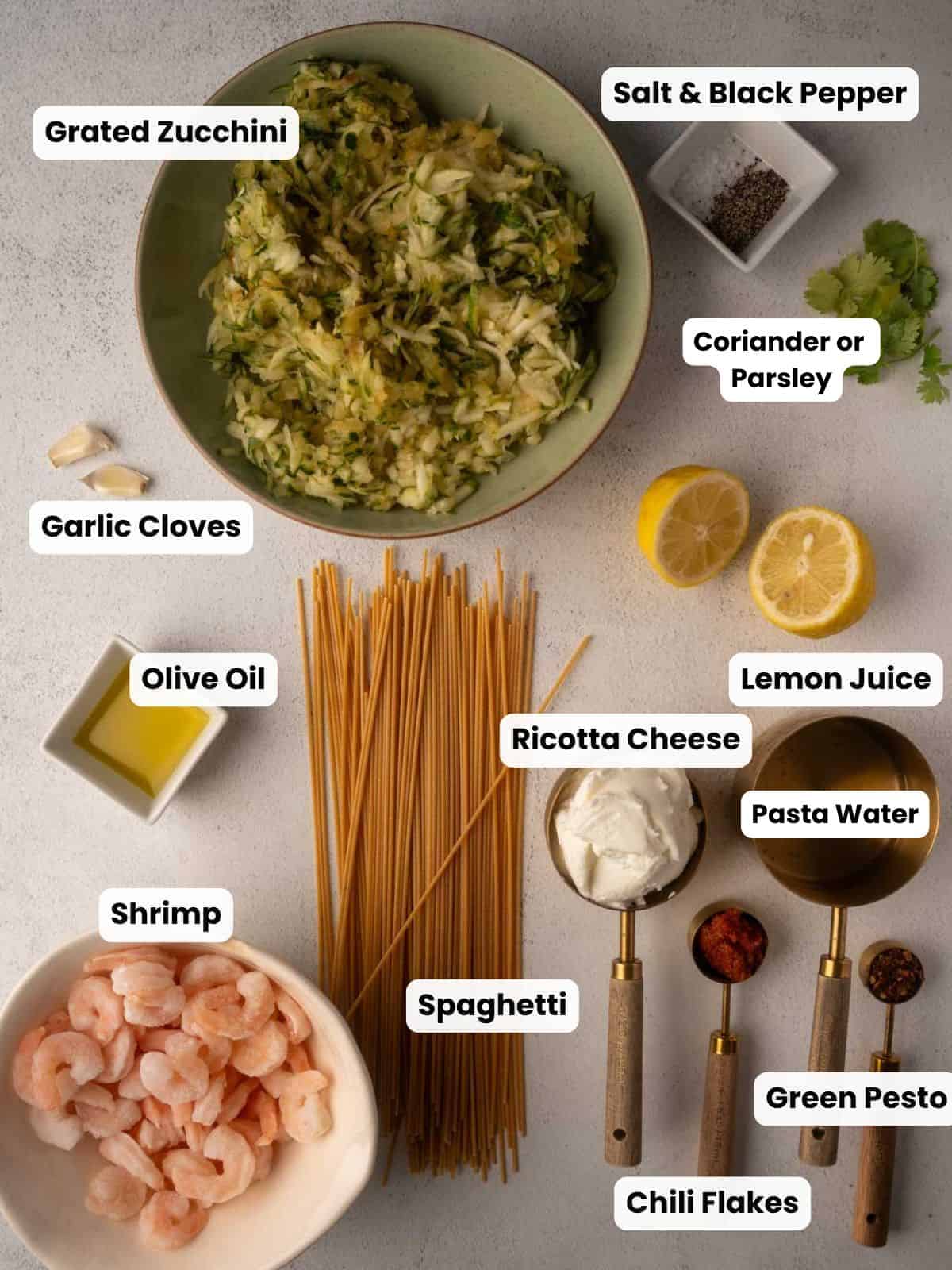
Tips for Choosing Ingredients
- Wholewheat Spaghetti: Any brand works well. Look for 100% whole wheat on the label. You can also use other whole grain pasta shapes like penne or fusilli.
- Shrimp: I recommend buying raw, frozen shrimp that is already peeled and deveined. This is more convenient and its a protein source I always have on hand in my freezer.
- Ricotta Cheese: For the creamiest sauce, full-fat ricotta is best. It has a richer flavor and texture. However, a lower-fat version will also work if you prefer.
- Pesto: A store-bought pesto is perfectly fine for this recipe to keep things quick and easy. Look for one with simple ingredients like basil, olive oil, nuts, and cheese. If you have more time you can try my homemade pistachio pesto recipe.
- Zucchini (Courgette): Choose a small to medium zucchini that feels firm to the touch. Larger zucchinis tend to have more water and seeds, which can make the sauce a bit watery.
Ingredient Substitutions
Here are some tips to help you adjust the recipe to suit your individual dietary needs and preferences. I only recommend swapping 1 - 2 ingredients, so the original recipe doesn't completely change.
- Gluten-Free: Simply swap the wholewheat spaghetti for your favorite gluten-free pasta. Brown rice pasta or a pasta made from chickpeas or lentils are other options but always double check the label for gluten.
- Dairy-Free: Instead of ricotta try blended silken tofu and swap the parmesan for nutritional yeast.
- Vegan: For a vegan version, use the dairy-free substitutions above and swap the shrimp for a can of cannellini beans or chickpeas.
- Nut-Free: Ensure your pesto is nut-free. Many traditional pestos contain pine nuts, but you can find or make versions that use seeds (like sunflower or pumpkin seeds) or are nut-free altogether.
- Higher Protein: Use a chickpea or lentil-based pasta, or simply increase the amount of shrimp in the recipe.
- Lower Calorie: Use low-fat ricotta and swap some of the wholewheat pasta for spiralized zucchini. You can also add extra grated zucchini or toss in veggies like spinach to make the dish more filling for fewer calories.
Please note: This recipe has not been tested with other substitutions or variations. If you replace or add any ingredients, please let me know in the comments below! I'd love to hear how it worked out! 💛
Recipe Variations
- Add More Veggies: Stir in a large handful of fresh spinach at the end until it wilts, or add some halved cherry tomatoes or frozen peas along with the shrimp.
- Switch the Protein: This recipe would also be delicious with diced chicken breast or canned cannellini beans (white kidney beans).
- Spice it Up: If you like more heat, increase the amount of chili flakes or add a pinch of cayenne pepper to the sauce.
How To Make This Pesto Ricotta Pasta
Below are some visuals that I hope are helpful. For the full recipe instructions don't forget to check out the recipe card below.
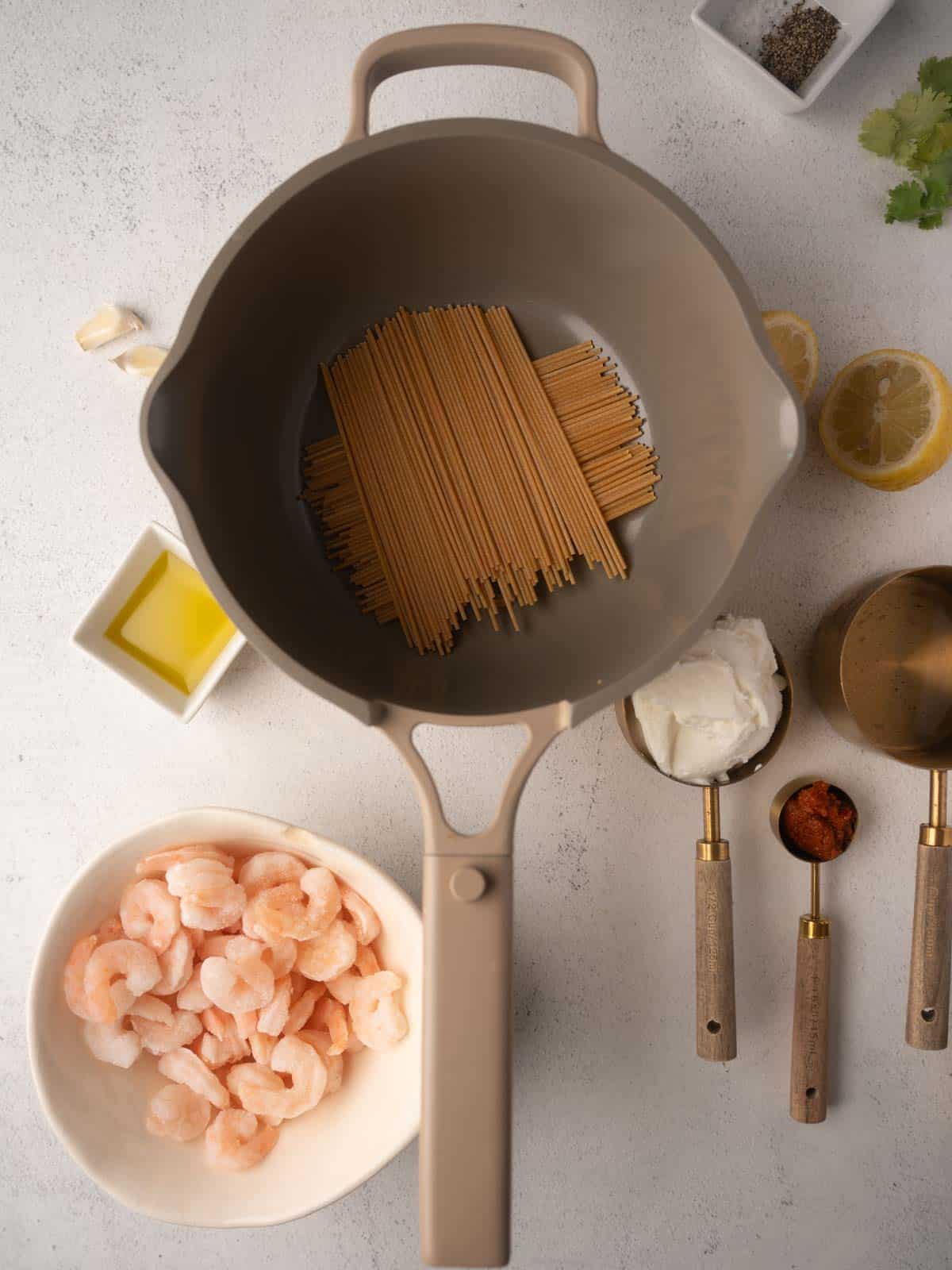
- Cook the Pasta: Cook the pasta according to the package directions. Reserve some of the pasta water.
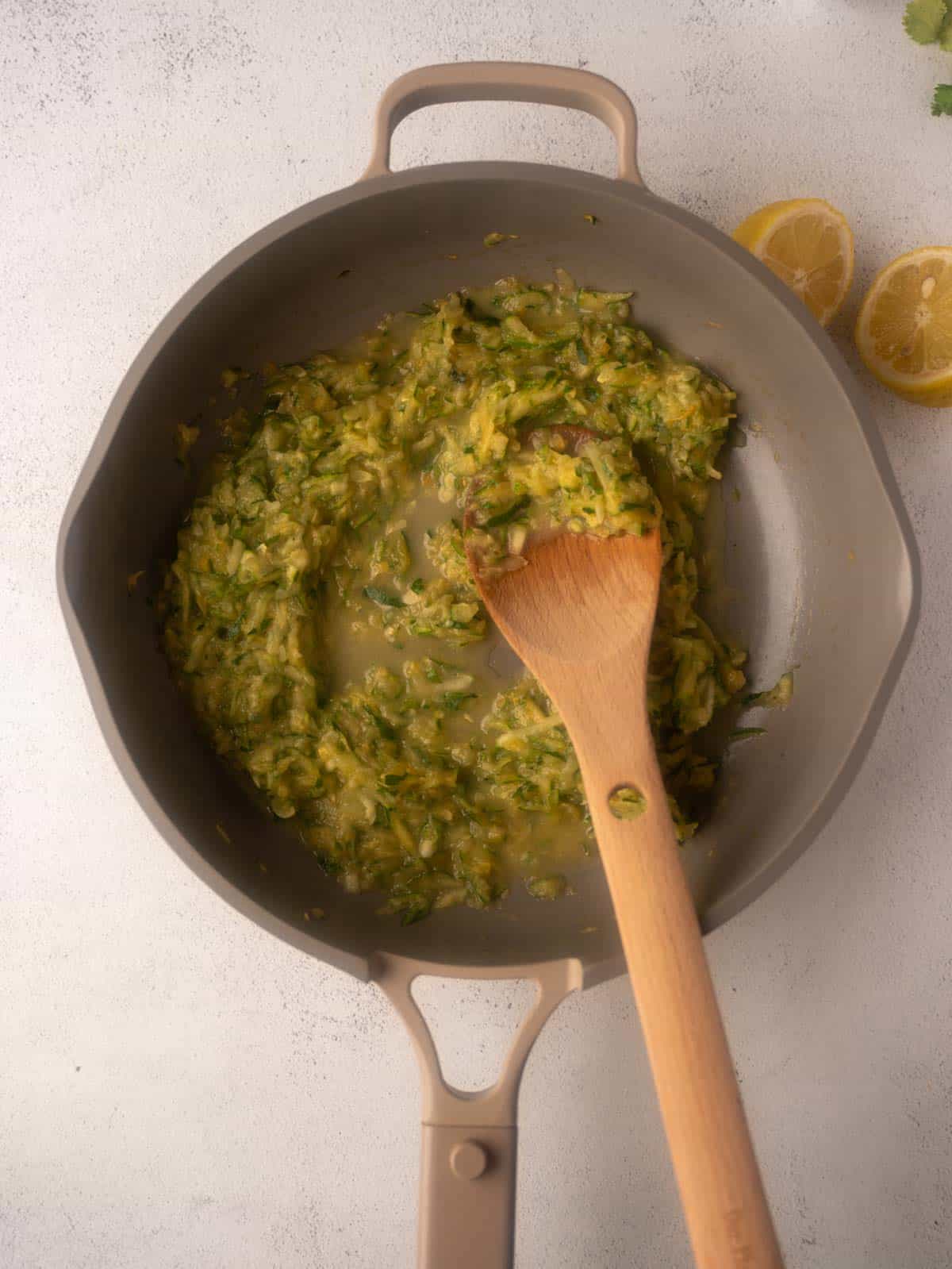
- Sauté the Vegetables: While the pasta is cooking, heat the olive oil in a large pan (skillet) over medium heat. Add the grated zucchini and minced garlic. Cook for 5-6 minutes, stirring occasionally, until the zucchini has softened. Season lightly with salt and pepper.
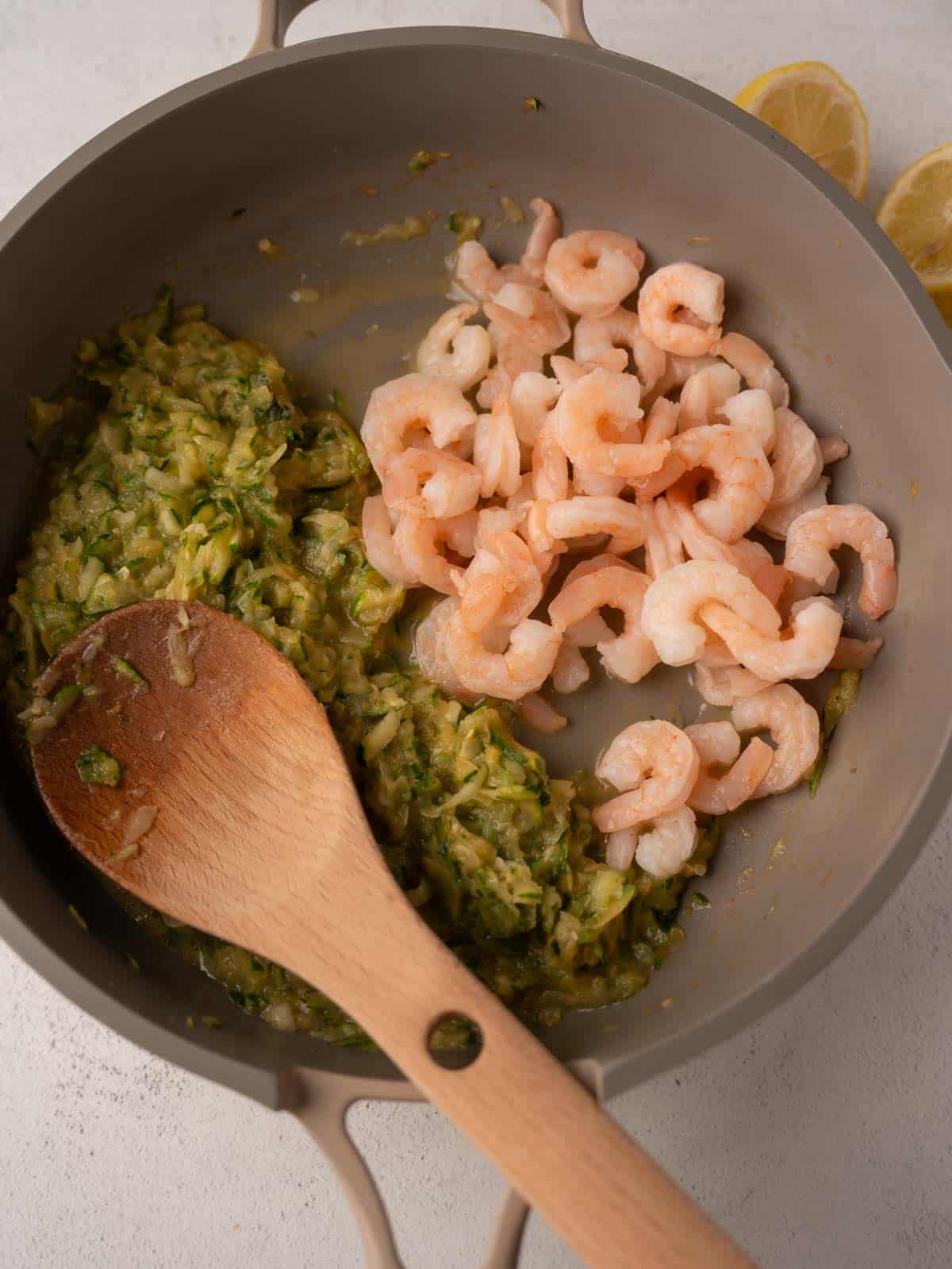
- Cook the Shrimp: Push the zucchini mixture to one side of the pan. Add the shrimp to the other side in a single layer. Cook for 2-3 minutes per side, until they turn pink and opaque. Be careful not to overcook them.
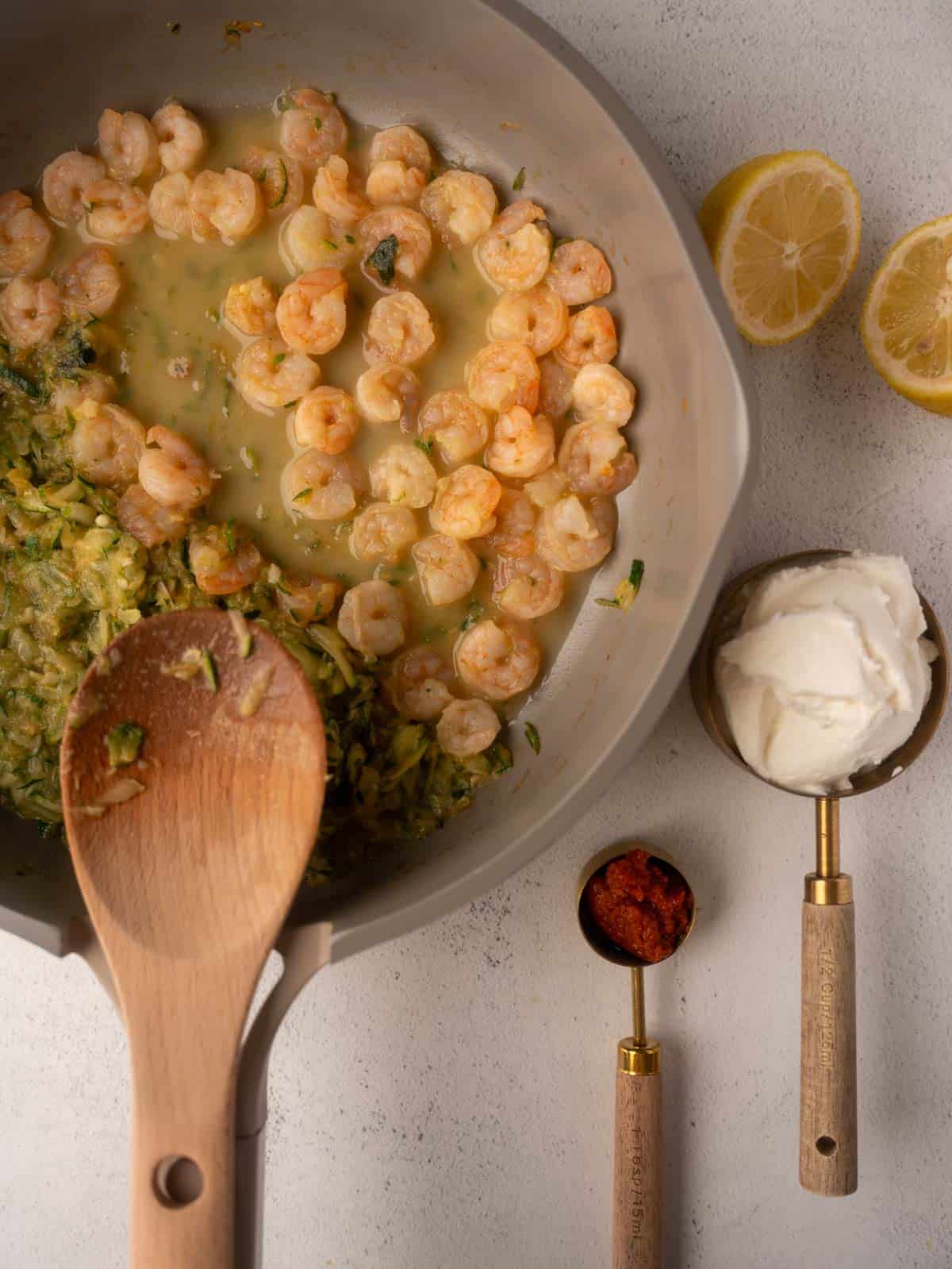
- Create the Sauce: Reduce the heat to low. Add the ricotta cheese, pesto, and the juice of ½ a lemon to the pan. Stir everything together until the ricotta melts and forms a creamy sauce.
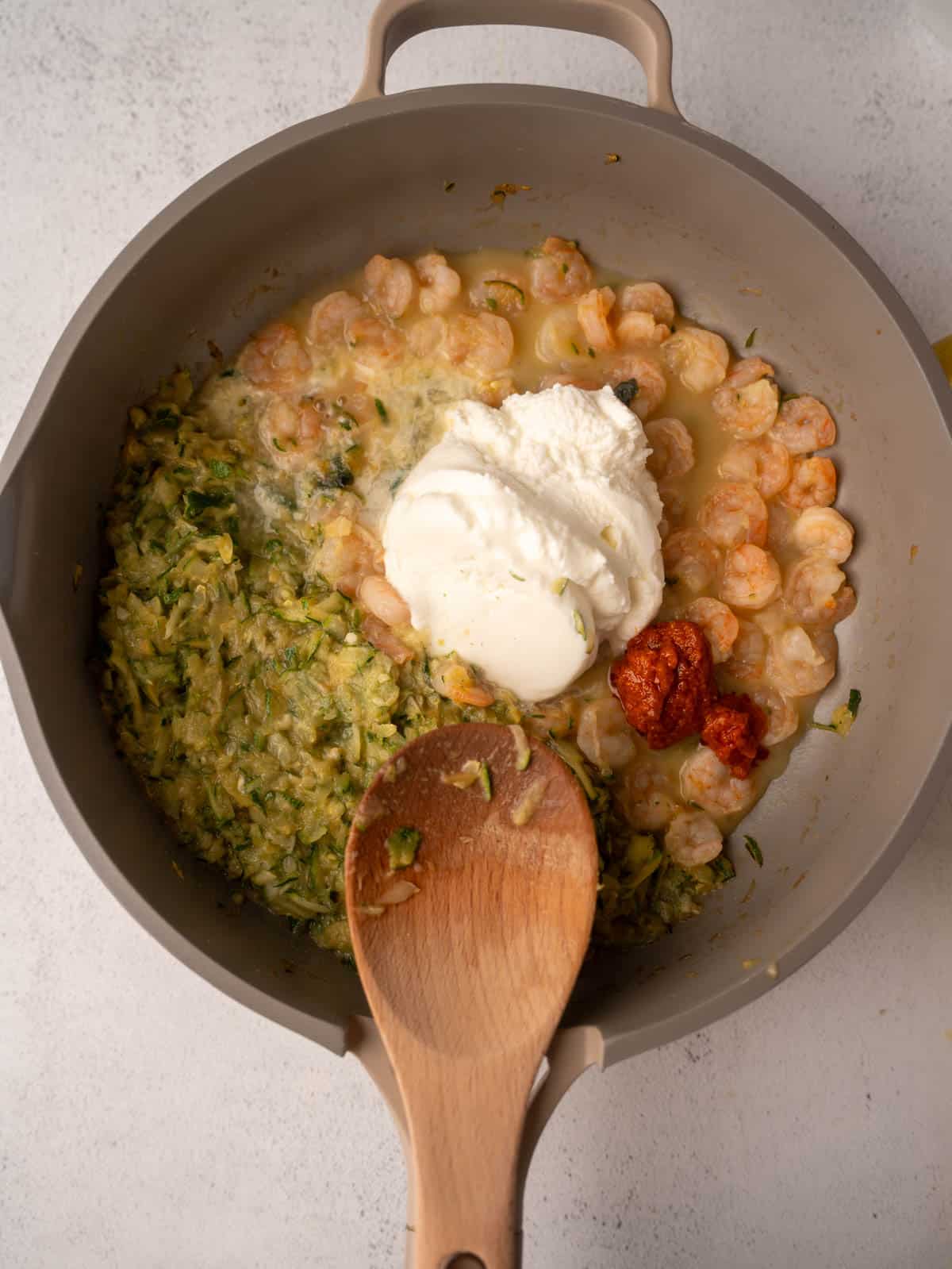
- Combine and Finish: Add the cooked spaghetti to the skillet with the sauce. Let it simmer for 1-2 minutes. If the sauce is too thick, add some of the pasta water until it reaches your desired consistency.
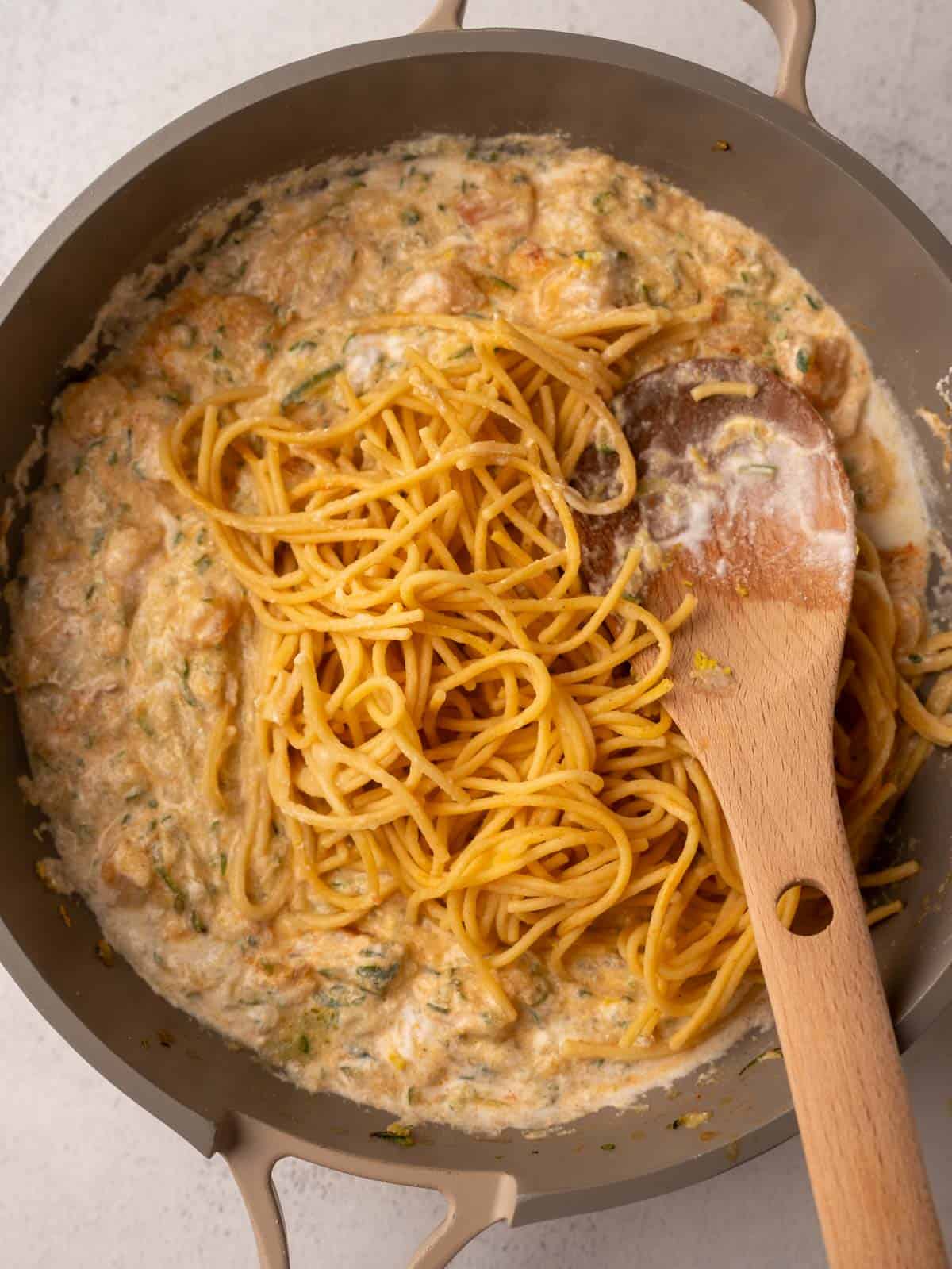
- Serve: Stir in the chopped fresh basil. Divide the pasta between two bowls. Top with chili flakes and a sprinkle of grated Parmesan cheese, if desired.
Save This Recipe! 💌
Expert Tips for Making This Recipe
Don't Skip the Pasta Water: The starchy water is the key to a silky, creamy sauce that clings to the pasta. It helps emulsify the sauce and prevents it from being too thick or oily.
Don't Overcook the Shrimp: Shrimp cook very quickly! As soon as they turn pink and curl up, they are done. Overcooked shrimp can become tough and rubbery.
Use Fresh Lemon: Fresh lemon juice provides a much brighter, fresher flavor than bottled juice and is essential for lifting the flavors in this dish.
Grate the zucchini finely so it blends into the sauce.
Storage
Fridge: Store any leftovers in an airtight container in the refrigerator for up to 3 days.
Reheating: Reheat gently in a pan over low heat. You may need to add a splash of water or milk to loosen the sauce as it will thicken in the fridge.
Freezing: I do not recommend freezing this dish, as the ricotta sauce can separate upon thawing.
Nutrition Notes
Nutrition information was calculated using the USDA FoodData Central database and verified brand data for accuracy. Estimates are based on the exact ingredients and amounts listed, so your numbers may vary slightly depending on the brands and measurements you use.
FAQ
Absolutely! This sauce works well with almost any pasta shape. Try it with penne, fusilli, or rigatoni. For a gluten-free or higher-protein option, use pasta made from lentils or chickpeas like Banza.
This is an easy fix! If the sauce is too thick, simply stir in a bit more of the reserved pasta water until it reaches your desired consistency. If it's too thin, let it simmer on low for an extra minute or two to thicken up, or stir in a little more ricotta or grated Parmesan cheese.
Yes, however I'd recommend adding an alternative protein source like a can of drained and rinsed chickpeas, cannellini beans (white kidney beans) or some cooked tofu.
Being honest this pasta is best enjoyed fresh, but leftovers can still work. I recommend Reheat gently on the stovetop and add a splash of water to loosen the sauce.
Want to Learn About Nutrition?
Here are some nutrition education articles from a dietitian! And if you have any questions, feel free to reach out - I'm here to help.

📖 The Recipe
📖 Recipe
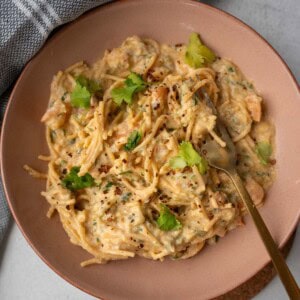
Easy Pesto Ricotta Pasta with Shrimp
Ingredients
- 80 g Wholewheat Spaghetti dry weight
- 8 g Olive Oil 2 teaspoons
- 2 Garlic Cloves
- 1 Medium Zucchini (courgette) grated
- 200 g Shrimp peeled and deveined, I recommend buying frozen, see notes
- 160 g Ricotta Cheese ⅔ cup
- 30 g Pesto 2 tablespoon
- 30 mls Lemon Juice 2 tablespoon approx ½ lemon
- 2 tablespoon Herbs (e.g., basil, parsley or coriander) chopped
- Salt & Black Pepper to taste
- ½ teaspoon Chili Flakes
To serve
- grated parmesan optional
Instructions
- Cook the pasta according to the package directions. Reserve some of the pasta water.80 g Wholewheat Spaghetti
- Sauté the Vegetables: While the pasta is cooking, heat the olive oil in a large pan (skillet) over medium heat. Add the grated zucchini and minced garlic. Cook for 5-6 minutes, stirring occasionally, until the zucchini has softened. Season lightly with salt and pepper.8 g Olive Oil, 1 Medium Zucchini (courgette), Salt & Black Pepper to taste
- Cook the Shrimp: Push the zucchini mixture to one side of the pan. Add the shrimp to the other side in a single layer. Cook for 2-3 minutes per side, until they turn pink and opaque. Be careful not to overcook them.200 g Shrimp
- Create the Sauce: Reduce the heat to low. Add the ricotta cheese, pesto, and the juice of ½ a lemon to the pan. Stir everything together until the ricotta melts and forms a creamy sauce.160 g Ricotta Cheese, 30 g Pesto, 30 mls Lemon Juice
- Combine and Finish: Add the cooked spaghetti to the skillet with the sauce. Let it simmer for 1-2 minutes. If the sauce is too thick, add some of the pasta water until it reaches your desired consistency. If its too thin allow it to simmer for another 5-10 minutes.
- Serve: Stir in the chopped fresh herbs. Divide the pasta between two bowls. Top with chili flakes and a sprinkle of grated Parmesan cheese, if desired.grated parmesan, ½ tsp Chili Flakes
Save This Recipe! 💌
Maria's Notes
- Shrimp Tip: Use frozen raw shrimp (peeled & deveined) for convenience. Thaw them quickly by placing them in a bowl of cold water for 15-20 minutes. Avoid using pre-cooked shrimp as they will become rubbery.
- Pasta Water is Key: Don't forget to reserve some pasta water! The starch in the water helps the sauce become creamy and cling to the pasta perfectly.
- Want more protein? Try a chickpea or lentil pasta like Banza
- Storage: Leftovers can be refrigerated in an airtight container for up to 3 days. Reheat gently in a pan, adding a splash of water to loosen the sauce.
Comments
No Comments