


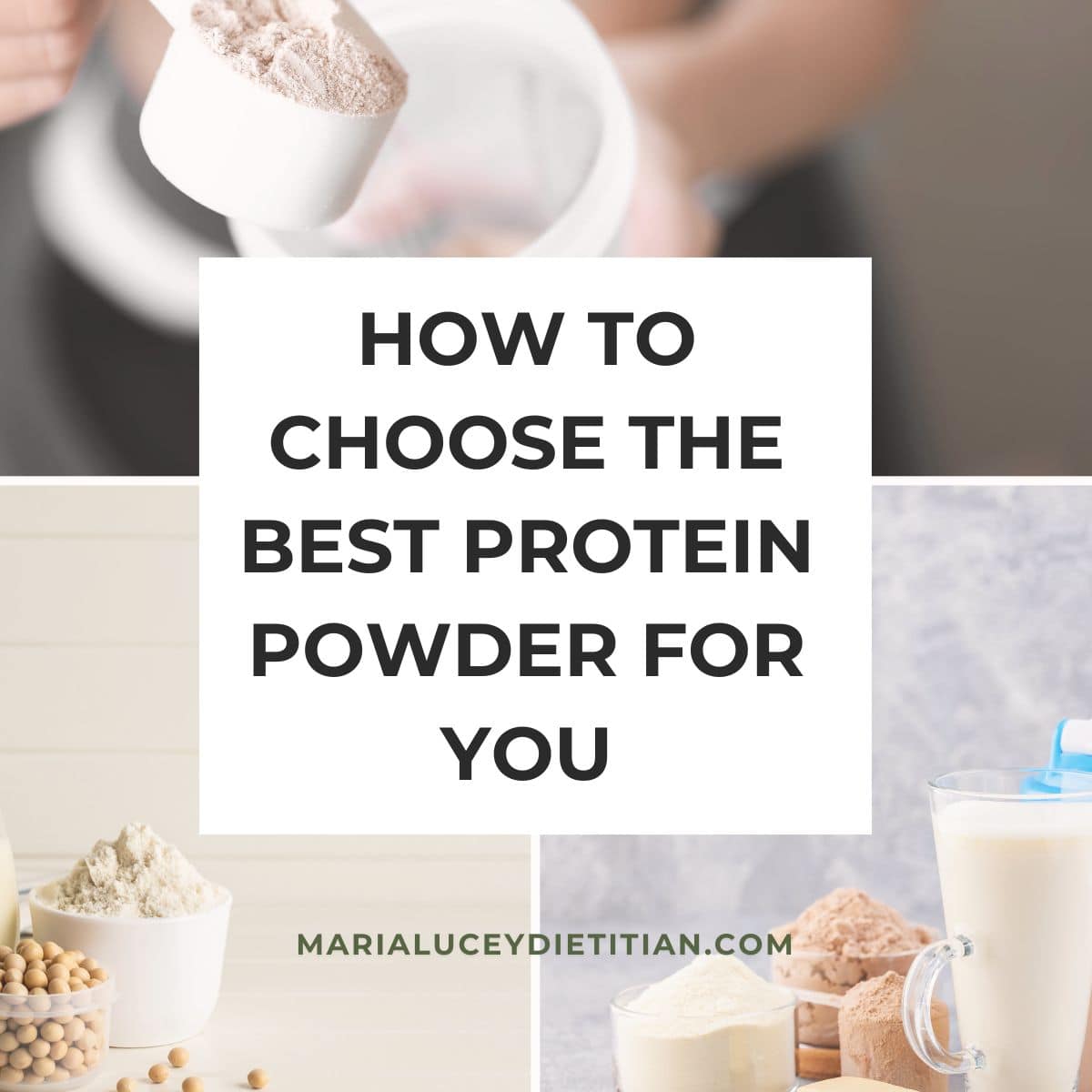
How to choose protein powder? A dietitian breaks down which option better supports your goals — whether that’s weight loss, building muscle, supporting your skin and joints, or simply getting more nutrients into your day.
Jump to:
- How to Choose the Best Protein Powder for Your Goals
- Best Protein Powder for Gaining Muscle or Preventing Muscle Loss
- What About Plant-Based Protein Powders?
- Dietitian Take: My Favorite Protein Powders
- Whey Isolate vs Concentrate vs Hydrolysate: Which One Should You Pick?
- Why is My Protein Powder Making Me Bloated? And How To Fix it
- How to Add Protein Powder to Food Without Ruining the Taste
- Do You Need Collagen If You're Already Taking Protein Powder?
- Summary: 6 Steps To Choosing The Perfect Protein Powder
- Final Thoughts
- My Favorite Recipes Using Protein Powder
- 💬 Comments
Do You Really Need Protein Powder?
Let’s start with the obvious question. Do you actually need protein powder?
The short answer is: not necessarily.
If you’re eating a balanced diet and getting enough protein from food, you might not need it at all. But for many people, protein powder can be a really handy option.
Especially if you're:
- Busy and don't have time to cook
- Struggling to hit your protein target
- Not in the mood to prep chicken every week
And in some cases protein powders can be a more economical choice.
But remember, it’s not about replacing food. It’s about having a convenient, cost-effective option on standby when you need it.
FYI: If you don't know how much protein you need every day, I have a full post breaking this down.
Is Too Much Protein Bad?
This question comes up a lot over on my YouTube channel.
If you’re a healthy adult, having more protein than your body technically needs (even two to three times over) usually isn’t harmful. The kidneys can handle it just fine. That said, more isn’t always better.
Going overboard with protein shakes can mean you're crowding out other important nutrients like fiber, healthy fats, and micronutrients. And yes — protein still has calories! Too much of anything can lead to weight gain, protein included.
I’ve seen so many women unintentionally gain weight because their personal trainer told them to drink three protein shakes a day on top of their meals. Completely unnecessary. But that’s a rant for another day.
How to Choose the Best Protein Powder for Your Goals
The first question to ask yourself is: what’s my goal with protein powder?
Typically it is either:
1. You want to meet your overall protein needs
Maybe you're aiming to:
- Build or maintain muscle
- Recover better from your workouts
- Support athletic performance
- Just get enough protein into a busy day
If that’s you, then you’ll want a protein powder that provides a complete protein. This means it contains all the essential amino acids your body needs. (Don’t worry, I’ll explain which types are best for this in just a minute.)
2. You’re looking for beauty or wellness benefits
In this case, you're probably not too worried about your general protein intake (because hopefully you are already meeting them) but you are interested in things like:
- Healthier skin
- Hair and nail growth
- Joint support
- Gut health
This is where collagen powder comes in. It’s not a complete protein, but it does contain specific amino acids (like glycine and proline) that help support connective tissue, skin elasticity, and more.
Or maybe… you want both?
Totally doable. Lots of people use both a protein powder and collagen — and I’ll explain how to do that smartly a little further down.
Best Protein Powder for Gaining Muscle or Preventing Muscle Loss
If your goal is to build or maintain muscle, improve strength, or simply make sure you’re getting enough high-quality protein each day, then you want a complete protein powder — one that provides the essential building blocks your body needs to repair and grow muscle.
But not all protein powders are created equal. When it comes to protein quality, there are three main things to look for:
1. The Amino Acid Profile
There are 20 amino acids in total, but 9 of them are considered essential — meaning your body can’t produce them on its own. You have to get them through your diet.
To support muscle growth, aim for a protein powder that provides all 9 essential amino acids. You need about 10 grams of essential amino acids per serving to really kick off the muscle-building process.
This is usually no problem with animal-based proteins like whey, which naturally contain the full amino acid profile. But if you're plant-based, you’ll need to be a little more intentional — and we’ll cover that in the next section.
2. Leucine: The Anabolic Switch
Leucine is one of those essential amino acids, but it deserves a special mention.
Think of leucine like a light switch for muscle building — it’s what triggers the process of muscle protein synthesis. Without enough leucine, your body simply doesn’t get the message to start rebuilding muscle.
For most people, around 2–3 grams of leucine per serving is ideal for muscle support. Again, whey does a great job here, while some plant proteins may fall short unless blended or fortified.
3. Bioavailability: How Easily Your Body Absorbs It
Not all proteins digest at the same speed, and when you take your protein can affect which type is best.
- Whey protein is fast-digesting — making it a great choice after workouts when you want amino acids hitting your bloodstream quickly.
- Casein protein digests slowly — ideal before bed, during long periods without food, or if you're doing intermittent fasting and want something to last.
In general, the best protein powder for muscle recovery and performance is one that’s high in essential amino acids, rich in leucine, and easy for your body to absorb when you need it most.
What About Plant-Based Protein Powders?
If you're vegan, dairy-free, or just prefer to avoid animal products, don't worry. You can still find a protein powder that works well for your goals. You’ll just need to be a bit more strategic.
Soy protein is your strongest plant-based option. It’s the most comparable to whey in terms of amino acid profile and how effective it is for building muscle.
Next up are plant-based protein blends. These usually combine sources like:
- Pea
- Rice
- Hemp
- Pumpkin seed
Individually, these aren’t complete proteins. But when combined, they can provide all nine essential amino acids and help you get closer to that important leucine threshold.
Some newer plant-based powders even add extra leucine to support muscle-building. If possible, choose one that provides at least 2.5 grams of leucine per serving.
In studies comparing whey, casein, and soy protein, whey performed best for building muscle, with soy coming in second. So while plant-based powders can absolutely support your goals, whey still has a slight advantage if muscle gain is your main focus.
Dietitian Take: My Favorite Protein Powders
Protein Powders Without Artificial Sweeteners
- Kinetica is an Irish brand. All of their products are batch-tested and Informed Sport accredited, which means they're independently verified for safety — a big plus for athletes or anyone who wants that extra layer of trust. Their plant-based protein offers 2.13 grams of leucine per serving, which is impressive for a non-dairy option. They also have a range of excellent whey protein powders, with both flavored and unflavored options depending on your preference.
- Ascent whey and ascent casein - both Informed Sport certified.
Plant Based Protein Powders
What’s Your Preference?
Do you use protein powder? I’d love to know which one works best for your routine and why. If you’ve got a brand you love, feel free to share—I’m always open to trying new ones and can add it to the recommended list here too!
Save This Recipe! 💌
Whey Isolate vs Concentrate vs Hydrolysate: Which One Should You Pick?
To make things even more confusing there are quite a few whey protein options.
The truth? All of them are good choices — but here’s how to figure out which one might work best for you.
Whey Protein Isolate (WPI)
Whey isolate goes through extra filtration to “isolate” the protein. This usually means:
- Lower in calories
- Lower in lactose
- Higher protein content per scoop
It can be a better option for anyone who is:
- Sensitive to lactose
- Trying to reduce calories
- Looking for a leaner protein with faster absorption
The trade-off? It’s usually more expensive due to the extra processing. But if digestion, taste, or macros are a priority for you, it might be worth it.
Whey Protein Concentrate (WPC)
Whey concentrate is a little less processed and typically a bit more affordable. It contains slightly more:
- Fat
- Carbohydrates
- Lactose
That said, it still delivers a solid dose of high-quality, complete protein, and it’s a great option if you don’t have digestive sensitivities and want something more budget-friendly.
Whey Protein Hydrolysate (WPH)
Whey hydrolysate is whey that has been partially broken down (or “pre-digested”) into smaller peptides. This can help it:
- Absorb slightly faster
- Feel easier on digestion for some people
It sounds fancy, but the real-world difference is usually pretty small. It’s also more expensive and often doesn’t taste as nice. Most people don’t need it unless they’re dealing with very specific digestive issues or are competing at a high level.
Why is My Protein Powder Making Me Bloated? And How To Fix it
Bloating is one of the most common complaints when it comes to protein powders. If you’re feeling gassy, puffy, or just uncomfortable after your shake, you’re not imagining it. However, it doesn’t necessarily mean you need to ditch protein powder altogether.
Here’s what to check:
1. Look out for polyols (sugar alcohols)
Sweeteners like xylitol, sorbitol, or mannitol are often added to keep protein powders low in sugar and calories. But for many people, these can cause bloating, gas, or digestive discomfort, especially if consumed in larger amounts.
2. Check the type of protein
Some plant proteins like soy and pea naturally contain fermentable carbs (like GOS and fructans) that can be harder to digest — especially if you have IBS or a sensitive gut. Switching to a different plant blend or trying an isolate may help.
3. Watch for added prebiotics
Ingredients like inulin, chicory root, or Jerusalem artichoke are added to some powders to support gut health. While they can be beneficial for some, they’re also a common trigger for bloating in others.
How to Add Protein Powder to Food Without Ruining the Taste
Let’s get practical. Because there’s more nutrition science behind using protein powder in food than you might think. If you’ve ever stirred protein into your oatmeal and ended up with a weird, gritty mess, then you know what I'm talking about!
Baking With Protein Powder
Whey vs Casein
Whey and casein protein powder are completely different in texture and so will give a different baking result.
- Whey protein is fast-digesting and light, so it tends to rise well in baking. But it also can't hold a lot of water so it dries out quickly and can leave your muffins or pancakes a bit rubbery.
- Casein protein holds more moisture and gives a creamier texture. It’s great for brownies, protein bars, or anything you want to stay soft — but it doesn’t rise much.
This is why some recipes call for a specific protein type or use a blend that combines whey and casein to get the best of both worlds.
Plant-Based Proteins
Plant proteins (like pea, rice, or hemp) tend to give denser, grainier results in baking. That’s not necessarily a bad thing — it just means you may need to play around with your recipe expectations. If you're baking with plant-based protein, look for recipes that are specifically developed for it.
In Practice:
- Whey is my go-to for shakes and smoothies — it blends easily and has a neutral taste if you choose an unflavoured version.
- Casein works brilliantly in overnight oats or Ninja Creami recipes. It thickens up beautifully and gives a creamy, satisfying texture.
- For no-bake recipes like energy balls or protein bites, almost any protein powder will do. Taste and texture matter more than functionality here.
How to Add Protein to Hot Foods
Adding protein powder straight into hot porridge or coffee often ends up as a weird curdled mess.
Here’s how to fix it:
- First, mix your protein powder with a small splash of cold milk or water to form a smooth paste.
- Stir that into your hot porridge or drink after cooking.
- Don’t just dump it in — that’s when curdling happens.
Top tip: Collagen peptides work especially well in hot drinks and oats because they dissolve smoothly without clumping or changing the texture.
Do You Need Collagen If You're Already Taking Protein Powder?
Let’s say you’re already on top of your protein game. You’re getting what you need through food, maybe using a little whey or soy protein here and there, and you're feeling pretty good about it.
But now you're thinking — what about skin, joints, nails, or just a little extra support for healthy aging?
That’s where collagen supplements come in.
There’s now solid research showing that certain types of collagen can support skin elasticity, joint health, and connective tissue repair. But, not all collagen is created equal!
Some products on the market are overpriced, under-dosed, or include forms of collagen your body doesn’t absorb very well. So if you’re going to invest in a supplement, it’s worth making sure it’s the right one.
You can read more about how collagen compares to whey protein here, or check out my full article on Do Collagen Supplements Work? for a breakdown of the research and what to look for on the label.
Summary: 6 Steps To Choosing The Perfect Protein Powder
Time needed: 5 minutes
How To Choose Protein Powder
- Ask yourself: do you actually need it?
Before you start shopping, figure out if you even need a protein powder. If you're consistently meeting your protein needs through whole foods (like meat, dairy, eggs, legumes, tofu, etc.), you may not need to supplement at all.
- Get clear on your goals.
Your goals will guide what kind of protein is best for you:
Muscle gain, performance, or recovery? Go for a complete protein like whey, casein, soy, or a plant-based protein blend. These contain all nine essential amino acids and are ideal for rebuilding and maintaining muscle.
Skin, hair, nails, or joint support? A collagen protein might be what you're after — just keep in mind it’s not a complete protein, so it’s more of a functional add-on than a muscle builder.
Want both? Totally fine — many people use more than one type depending on the day or goal. - Think about when you're taking it.
Post-workout? Whey protein is ideal because it’s fast-digesting and gets to your muscles quickly.
Before bed or to keep you full longer? Casein is slower to digest and can be more filling — great for a nighttime shake or added to meals. - Consider your specific needs or lifestyle.
Trying to lose weight? A whey isolate is usually lower in calories, carbs, and fat — a solid option when you’re watching overall intake.
Plant-based or dairy-free? Go for soy protein (a complete plant protein) or a blend of plant-based proteins like pea, rice, and hemp to cover all your amino acid needs. - Check the label. Look for:
a. Minimal ingredients
b. At least 20g protein per serving (for most goals)
c. Low added sugars or sweeteners (unless that’s a priority for you)
d. Third-party tested for quality, especially if you're an athlete - Don’t forget taste and tolerability.
You won’t stick to a protein powder if it tastes awful or upsets your stomach. Try a sample first if possible, and check that it mixes well with the liquid you normally use. Look for third-party tested options if quality assurance matters to you (especially if you're an athlete).
Final Thoughts
While I always recommend focusing on whole foods first, supplements like protein powders and collagen can absolutely have a place in a balanced diet. The best option for you really depends on your goals and needs.
Start by asking yourself: What am I looking for?
If it’s skin, hair, or joint support, collagen might be a great fit. If you're aiming for muscle recovery or boosting your overall protein intake, a good-quality protein powder could be more beneficial.
Just remember—these are supplements, not substitutes. Use them to complement your diet, and make sure you’re choosing high-quality options you can trust.
My Favorite Recipes Using Protein Powder
- My Ninja Creami Protein Ice- Cream - you can customize this recipe and use any flavor of protein powder you like.
- My protein crisps recipe - a homemade protein bar using crisp cereal
- My protein pancake bowl - great for a quick high protein breakfast, no pancake flipping required.

Kayla says
This is so incredibly helpful, thank you!
Maria Lucey RD says
You are very welcome! Thank you so much for reading Kayla 💚
ruxandra says
Finally!!! You made clear so many things about protein! Thank you so much….. I am 60 and it makes it easier to look for what I need!I always look forward to your videos and emails🤗. Cheers!!