

This lemon and thyme roast chicken is dry brined overnight, then roasted with a garlicky lemon and thyme butter tucked right under the skin. You get crispy golden skin, juicy meat and a tray of lemony juices to spoon over everything.
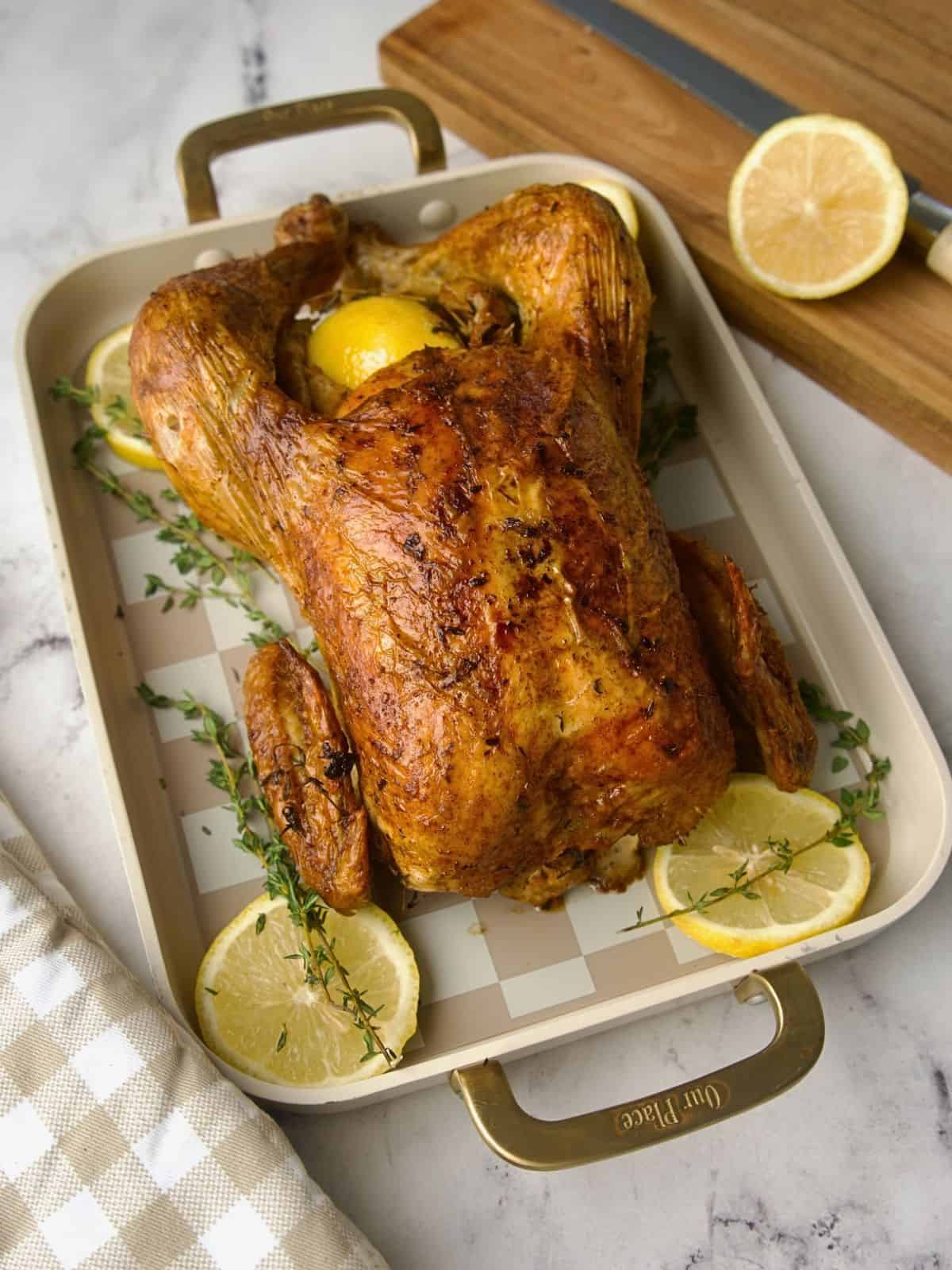
Lemon and Thyme Roast Chicken At A Glance
✅ Recipe Name: Lemon and Thyme Roast Chicken
🕒 Ready In: About 1 hour 50 minutes, plus an overnight dry brine
👪 Serves: 6, or 4 generously
🍽 Nutrition: About 485 calories, 37 grams protein, 0.3 grams fiber and 1 gram carbohydrates per serving
🥣 Main Ingredients: Whole chicken, lemons, fresh thyme, garlic and butter
📖 Dietary Info: High protein
⭐ Why You'll Love It: Crispy skin, juicy meat and a lemon and thyme flavor all the way through, with leftovers for the next few days.
Living abroad, I find there's nothing more comforting than a roast dinner. It's also a really good skill to have: it's lovely for inviting another couple over for dinner, or just making for yourself at the weekend, with leftovers for easy lunches.
I wanted a simple recipe but still full of flavor. So the zest, garlic and thyme go into the butter, and that butter goes under the skin.
And the overnight dry brine is the step that makes the biggest difference. It seasons the chicken all the way through and dries out the skin, so it roasts up crisp and golden.
More Chicken Dinners You'll Love
If you love this recipe, you might also enjoy my Lemon Chicken Orzo Pasta Bake for an easy one dish dinner, or my Healthy Marry Me Chicken when you want something creamy. My Chicken Shawarma Bowl is another favorite for meal prep, and you'll find plenty more ideas in my dinner recipes.
Jump to:
Recipe Nutrition Highlights
A roast chicken is a simple, high protein dinner, and as a dietitian I think it deserves a regular spot in your week. Here's what it brings to the table.
Protein that keeps you full. Each serving gives you around 37 grams of protein. Protein helps keep you satisfied for longer after a meal and supports muscle, which matters more and more as we get older. If you're not sure how much you need, I cover it in my guide to how much protein you need.
Where the fat is. Most of the fat in a roast chicken sits in the skin. A good amount of it is unsaturated fat, but the skin and butter do add saturated fat too. If you'd like a lighter plate, take the skin off the breast meat. If you love the crispy skin (and it really is the best bit), enjoy it as part of a meal with plenty of vegetables.
Seasoned from the inside. Dry brining means the salt is in the meat itself, so you shouldn't need to add much at the table. Not all of the brine salt ends up on your plate either, as some stays in the tray.
Add the fiber on the side. Chicken has no fiber on its own, so pair it with roast vegetables, greens or a salad to make it a balanced meal (see the serving suggestions below).
Nutrition information was calculated using Cronometer, a nutrition tracking tool that uses the USDA FoodData Central database and verified brand data for accuracy. Estimates are based on the exact ingredients and amounts listed, so your numbers may vary slightly depending on the brands and measurements you use. Food is much more than just numbers though, so use these as a guide rather than a rule.
Key Ingredients & Substitutions
The complete ingredient list with measurements can be found in the recipe card below.
- Whole chicken: I used a 1.75 kg (about 3¾ lb) chicken, which serves six, or four generously. A bigger bird will need longer in the oven, so go by the thermometer rather than the clock.
- Salt: I use fine sea salt for the dry brine. If you're using kosher salt, use 2 teaspoons of Morton or 1 tablespoon of Diamond Crystal, as the crystals are bigger.
- Butter and olive oil: I use salted Irish butter, which gives flavor and helps the skin brown, while the olive oil keeps the mixture soft enough to spread. Unsalted butter works too if that's what you have.
- Lemons: Use unwaxed lemons if you can find them, since you're using the zest. Zest one lemon before you cut it in half; it's much easier.
- Fresh thyme: Fresh is best here. If you only have dried, use about 1 teaspoon in the butter and skip the sprigs. Rosemary also works well with lemon.
- Garlic: Grated cloves go in the butter and a halved head goes in the cavity. The roasted cloves turn soft and sweet, so don't throw them out.
Equipment
Roasting tray: One that fits the chicken with a little space around it, so the lemon slices can sit in the juices.
Instant read meat thermometer: The most reliable way to know your chicken is cooked without overdoing it.
Kitchen string: For tying the legs so the chicken cooks evenly.
How To Make Lemon and Thyme Roast Chicken
Below are the simple steps for how to make this recipe. Don't forget to check out the recipe card at the bottom for the full recipe.
Dry brine the night before
Pat the chicken completely dry with kitchen paper, sprinkle the salt all over and inside the cavity, then leave it uncovered in the fridge overnight.
Make the lemon thyme butter
Mix the softened butter, olive oil, lemon zest, grated garlic, chopped thyme and black pepper. There's no salt in here, as the brine has already seasoned the chicken.
Butter under the skin
Gently loosen the skin over the breasts and thighs with your fingers. Push most of the butter underneath and rub the rest over the outside.
Stuff and tie
Squeeze the zested lemon halves over the chicken, then pop them into the cavity with the halved garlic and a few thyme sprigs. Tie the legs together.
Set up the tray
Scatter the lemon slices and remaining thyme in the tray and sit the chicken on top.
Roast
Start at 450°F or 230°C (210°C fan), then turn the oven down to 425°F or 220°C (200°C fan) as soon as the chicken goes in. Roast for 1 hour 15 minutes to 1 hour 30 minutes, basting every 30 minutes, until the thickest part of the thigh reaches 165°F or 74°C.
Rest and carve
Rest for 15 minutes, then carve and spoon the lemony juices over the top.
Expert Tips for Making This Recipe
Leave it uncovered in the fridge: Wrapping the chicken traps moisture. Uncovered, the skin dries out, and dry skin is crispy skin.
Check the right spot: Push the thermometer into the thickest part of the thigh without touching the bone, as the bone reads hotter than the meat.
Don't skip the rest: Resting lets the juices settle back into the meat instead of running all over your board.
Keep the carcass: Simmer it with an onion, carrot and a bay leaf for an easy homemade stock.
Serving Suggestions
Classic roast dinner: Roast potatoes, carrots and steamed greens, with the tray juices as a light gravy.
Something fresh: A crunchy cucumber salad or my herby corn salad in warmer months.
Grains and greens: Serve with rice, couscous or crusty bread to soak up the lemony juices, plus a big green salad.
Leftovers for lunch: Shred the meat into mason jar salads, wraps or grain bowls for an easy high protein lunch.
Storage
Fridge: Cool the leftover chicken within 2 hours, then store it in an airtight container for up to 3 to 4 days.
Freezer: Take the meat off the bone and freeze in portions for up to 3 months. Defrost in the fridge overnight.
Reheat: Warm it covered with a splash of the tray juices or water until piping hot (165°F or 74°C), or eat it cold in salads and sandwiches.
Recipe FAQs
No. Washing raw chicken can splash bacteria around your sink and kitchen. Patting it dry with kitchen paper is all you need, and roasting it to 165°F or 74°C makes it safe to eat.
Salt the chicken just before you add the butter and roast as normal. It will still taste great, but the skin won't be quite as crispy and the meat won't be as well seasoned.
Pierce the thickest part of the thigh: the juices should run clear, not pink, and the leg should feel loose when you wiggle it. A thermometer is still the most reliable way to check.
Yes. Squeeze the soft cloves out of their skins and spread them over the chicken or some bread. They turn sweet and mellow in the oven.
📖 Recipe

Lemon and Thyme Roast Chicken
Equipment
- Roasting tray
- Instant read meat thermometer
- Kitchen string
Ingredients
- 1 whole chicken 1.75 kilograms or about 3¾ pounds, giblets removed
- 1½ teaspoons fine sea salt about 9 grams, or 2 teaspoons Morton kosher salt or 1 tablespoon Diamond Crystal kosher salt
- 2 tablespoons salted butter softened (I use Irish butter)
- 1 tablespoon extra virgin olive oil
- 2 lemons unwaxed, 1 zested then halved, 1 sliced into rounds
- 2 cloves garlic finely grated
- 10 sprigs fresh thyme leaves from 4 sprigs finely chopped (about 1 tablespoon)
- ½ teaspoon ground black pepper
- 1 head garlic halved crosswise
Instructions
- The night before, pat the chicken completely dry with kitchen paper. Sprinkle the salt all over the skin and inside the cavity. Place on a plate or rack, uncovered, in the fridge for at least 4 hours or up to 24 hours.1 whole chicken, 1½ teaspoons fine sea salt
- Take the chicken out of the fridge 30 to 45 minutes before cooking. Preheat the oven to 450°F or 230°C (210°C fan).
- In a small bowl, mix the softened butter, olive oil, lemon zest, grated garlic, chopped thyme and black pepper. Do not add salt.2 tablespoons salted butter, 1 tablespoon extra virgin olive oil, 2 lemons, 2 cloves garlic, 10 sprigs fresh thyme, ½ teaspoon ground black pepper
- Gently loosen the skin over the breasts and thighs with your fingers. Spread most of the butter mixture under the skin, then rub the rest over the outside.
- Squeeze the juice from the zested lemon halves over the chicken. Place the squeezed halves in the cavity with the halved garlic head and 3 thyme sprigs. Tie the legs together with kitchen string.2 lemons, 1 head garlic, 10 sprigs fresh thyme
- Scatter the lemon slices and remaining thyme sprigs in a roasting tray and sit the chicken on top.2 lemons, 10 sprigs fresh thyme
- Place the chicken in the oven and immediately reduce the temperature to 425°F or 220°C (200°C fan). Roast for 1 hour 15 minutes to 1 hour 30 minutes, basting with the tray juices every 30 minutes. If the skin browns too quickly, cover loosely with foil.
- The chicken is done when the thickest part of the thigh reaches 165°F or 74°C and the juices run clear.
- Rest for 15 minutes before carving. Spoon the lemony tray juices over the chicken to serve.


Comments
No Comments