

You have probably heard that you should eat more fiber, but most people are still not getting enough.
And honestly, I get why.
Fiber does not get the same attention as protein. It does not sound as exciting. And if you grew up thinking fiber was just something you needed to help you go to the toilet, it is easy to underestimate how important it actually is.
But fiber is one of the most underrated nutrients for women’s health, digestion, heart health, blood sugar balance, fullness, and long-term weight management.
In this post, I’m going to break down what fiber is, how much you actually need, the best high-fiber foods to eat, and how to increase your intake without feeling bloated and uncomfortable.
Note: I usually use the spelling “fiber,” but if you are in Ireland or the UK, you may be more familiar with “fibre.” Same nutrient, different spelling.
🌟 Download Your FREE Complete Guide to Fiber! 🌟
Looking to boost your dietary fibre intake? Click the link above to get your hands on the comprehensive eBook, which is absolutely free! Make the most out of your nutrition today. 🍏🥦
Jump to:
- Quick Answer: What Are the Best High-Fiber Foods?
- What is Fiber?
- What Are The Different Types Of Fibre?
- How Much Fiber Do Adults Need Per Day?
- How Much Fiber Do Children Need?
- Health Benefits Of Fiber
- How To Reach Your Daily Fiber Target
- Simple Tips For Increasing Your Fiber Intake
- A Word On Beta-Glucan
- Resources
- Final Thoughts
- More High-Fiber Recipes You May Enjoy
- 💬 Comments
Quick Answer: What Are the Best High-Fiber Foods?
Some of the best high-fiber foods include:
- lentils
- black beans
- chickpeas
- oats
- barley
- chia seeds
- flaxseed
- raspberries
- pears
- apples with the skin
- potatoes with the skin
- wholegrain bread
- whole wheat pasta
- brown rice
- nuts and seeds
- vegetables, especially broccoli, carrots, peas, and leafy greens
The easiest way to eat more fiber is not to obsess over one “superfood.” It is to eat more plant foods overall.
Think: fruit, vegetables, beans, lentils, whole grains, nuts, and seeds.
What is Fiber?
Fiber is a type of carbohydrate found in plant foods.
Unlike sugars and starches, fiber is not fully digested and absorbed in the small intestine. Instead, it travels down into the large bowel, where some types of fiber are fermented by the bacteria that naturally live in your gut.
This is one of the reasons fiber is so important. It does not just “pass through.” It actually helps support your gut, your bowel habits, your cholesterol levels, your blood sugar response, and how satisfied you feel after eating.
Fiber is only found in plant foods, so you will not find it in meat, fish, eggs, dairy, or oils.
What Are The Different Types Of Fibre?
There are over 100 types of fiber, but to keep it simple, we generally divide them into two groups: soluble and insoluble fiber.
| Type of fiber | What it does | Where you find it |
| Soluble fiber | Absorbs water and forms a gel-like texture in the gut. It can help support cholesterol levels, blood sugar balance, and softer stools. | Oats, barley, beans, lentils, peas, apples, citrus fruits, carrots, chia seeds, and flaxseed |
| Insoluble fiber | Adds bulk to your stool and helps food move through the digestive tract. This is the type many people think of as “roughage.” | Whole grains, wheat bran, vegetable skins, fruit skins, nuts, seeds, and many vegetables |
You do not need to micromanage the different types.
The goal is to eat a variety of plant foods so you naturally get both.
How Much Fiber Do Adults Need Per Day?
Most adults should aim for at least 25 grams of fiber per day.
However, many people may benefit from more than this, especially if they eat a higher-calorie diet. A common guideline is to aim for about 14 grams of fiber for every 1,000 calories you eat.
So, for example:
| Daily calorie intake | Approximate fiber target |
| 1,800 calories | 25 grams fiber |
| 2,000 calories | 28 grams fiber |
| 2,500 calories | 35 grams fiber |
Please do not take this as another thing you need to track obsessively.
For most people, the better goal is simply this: add more high-fiber foods to the meals you are already eating.
How Much Fiber Do Children Need?
Fiber is important for children too, but children have smaller stomachs and different nutrition needs, so we do not want to go too extreme.
Older Irish guidance often used the simple “age plus 5 grams” rule. For example, a 5-year-old would aim for around 10 grams of fiber per day.
However, newer WHO guidance suggests higher targets for children from age 2 upwards:
| Age | Suggested daily fiber intake |
| 2 to 5 years | at least 15 grams per day |
| 6 to 9 years | at least 21 grams per day |
| 10 years and older | at least 25 grams per day |
For children, the focus should be on normal, family-friendly foods: fruit, vegetables, oats, potatoes with the skin, wholegrain bread, beans, lentils, and nuts or seeds where age-appropriate and safe.
Are We Eating Enough Fibre?
Most people are not eating enough fiber.
In Ireland, around 80% of people are reported to fall short on fiber intake. In the United States, fewer than 1 in 10 adults meet fiber recommendations according to the American Society for Nutrition.
That means this is not a niche problem. It is one of the most common gaps in modern diets.
And the good news is, you do not need a complete diet overhaul to improve it.
Even adding one extra fiber-rich food per meal can make a big difference over time.
Health Benefits Of Fiber
1. Fiber supports heart health
One of the main reasons is that certain types of soluble fiber can help lower LDL cholesterol, which is often referred to as “bad” cholesterol. This is especially true for beta-glucan, a type of soluble fiber found in oats and barley.
This is why oats are one of my favorite foods to recommend for heart health. If lowering cholesterol is one of your goals, you may also find my post on how to reduce cholesterol helpful.
Fiber-rich eating patterns also tend to include more whole grains, fruit, vegetables, beans, lentils, nuts, and seeds. These foods are not only high in fiber, but also provide vitamins, minerals, antioxidants, and other plant compounds that support overall cardiovascular health.
If you are working on your heart health more generally, you may also like my guide on how to lower blood pressure naturally with diet and lifestyle.
Save This Recipe! 💌
2. Fiber helps support healthy digestion
Fiber is probably best known for helping with digestion, and yes, this is a big one.
Insoluble fiber adds bulk to your stool and helps move things along through the digestive tract. Soluble fiber absorbs water and can help soften stools, which may support more comfortable bowel movements.
This is why getting enough fiber can be helpful for constipation.
However, there is one important thing to remember: increasing fiber too quickly can make bloating, gas, or discomfort worse, especially if your gut is not used to it.
So do not go from zero to chia-seed-everything overnight.
Start small. Add one high-fiber food at a time and allow your gut to adjust.
3. Fiber feeds your gut bacteria
Some types of fiber act as prebiotics. This means they feed the beneficial bacteria in your gut.
When gut bacteria ferment fiber, they produce compounds called short-chain fatty acids. These compounds are being studied for their role in gut health, inflammation, metabolism, and overall health.
This does not mean you need to panic-buy every gut health supplement you see online.
A great first step is much simpler: eat more plants.
Oats, beans, lentils, chickpeas, berries, onions, garlic, asparagus, bananas, nuts, and seeds can all help support a more fiber-rich, gut-friendly diet.
For an easy oat-based option, try my gut-healthy oat breakfast bars. They are packed with oats, seeds, and a variety of plant foods.
4. Fiber helps keep you full
Fiber-rich foods tend to be filling.
This is partly because fiber adds volume to food, slows digestion, and helps meals feel more satisfying. It is one reason why meals based around oats, beans, lentils, fruit, vegetables, whole grains, nuts, and seeds can keep you fuller than very low-fiber meals.
This can be really helpful if your goal is weight management, but I do not want you to think of fiber as a diet trick.
Fiber is not about trying to eat the lowest-calorie meal possible. It is about building meals that actually satisfy you.
For example, a bowl of high protein oatmeal with berries and seeds is going to keep most people much fuller than a low-fiber cereal eaten on its own.
The same goes for balanced snacks. If you need help building snacks that actually keep you going, my post on balanced snack ideas is a good place to start.
5. Fiber supports steadier blood sugar levels
Fiber slows down how quickly carbohydrates are digested and absorbed.
This can help reduce sharp rises in blood sugar after meals, especially when fiber is paired with protein and healthy fats.
For example, oats on their own are nutritious, but oats combined with Greek yogurt, chia seeds, berries, and nut butter will usually be more satisfying and blood-sugar friendly than a plain bowl of oats alone.
That is exactly why I love recipes like my creamy high-protein overnight oats. You get fiber from the oats, chia seeds, and fruit, plus protein from the Greek yogurt and milk.
6. Fiber may reduce the risk of chronic disease
Eating enough fiber is linked with a lower risk of several chronic diseases, including heart disease, type 2 diabetes, and bowel cancer.
This does not mean fiber alone prevents disease. Nutrition never works that way.
But a fiber-rich diet usually means a diet rich in whole grains, fruits, vegetables, beans, lentils, nuts, and seeds. That overall pattern is consistently linked with better long-term health.
How To Reach Your Daily Fiber Target
I do not think most people need to track every gram of fiber in an app.
In fact, I think that can make healthy eating feel more complicated than it needs to be.
Instead, use these four simple habits.
1. Eat fruit or vegetables at most meals
A good starting point is to aim for at least 5 portions of fruit and vegetables per day, and more if you can.
Easy ways to do this:
- Add berries or banana to breakfast.
- Add salad to sandwiches and wraps.
- Keep frozen vegetables in the freezer.
- Add spinach, peppers, mushrooms, or tomatoes to eggs.
- Serve dinner with a side of vegetables.
- Snack on fruit with yogurt, nuts, or peanut butter.
Even if you do not hit the target every single day, every extra portion helps.
2. Choose whole grains more often
Whole grains contain more fiber than refined grains because they keep more of the original grain intact.
This does not mean white bread, white pasta, or white rice are “bad.” It just means wholegrain versions can be an easy way to increase fiber without changing your whole diet.
Try:
- oats
- wholegrain bread
- whole wheat pasta
- brown rice
- quinoa
- barley
- bulgur wheat
- wholegrain wraps
- potatoes with the skin left on
If breakfast is where you struggle most, recipes like my high protein oatmeal, healthy apple crumble with oats, or creamy high-protein overnight oats are easy ways to get more fiber in early.
3. Add beans, lentils, and chickpeas a few times per week
Beans, lentils, and chickpeas are some of the most underrated foods for health.
They provide fiber, plant-based protein, slow-digesting carbohydrates, minerals, and plenty of volume to meals.
You can add them to:
- soups
- stews
- curries
- chili
- pasta sauces
- salads
- wraps
- tacos
- grain bowls
If you are not used to eating beans and lentils, start with a small amount. Even adding 2 to 3 tablespoons into a meal is a great start.
Some easy recipes to try are my 30 minute black bean chicken enchiladas, black bean and mango salad, high protein hummus, Mediterranean roasted chickpeas, and cheesy white bean tomato bake.
4. Add nuts and seeds daily
Nuts and seeds are small but mighty.
They provide fiber, healthy fats, minerals, and a satisfying crunch. You do not need a huge amount either. A tablespoon or two can make a difference.
Try adding:
- chia seeds to yogurt or overnight oats
- ground flaxseed to porridge
- pumpkin seeds to salads
- walnuts to Greek yogurt
- almonds as a snack
- peanut butter to toast, oats, or apple slices
One of the easiest high-fiber snacks on my site is my single serve chia seed protein pudding. It contains over 13g of fiber per serving, which is a big chunk of your daily target in one snack.
Simple Tips For Increasing Your Fiber Intake
Here are some easy ways to increase your fiber intake without making your diet feel like a full-time job.
- Choose oats, Weetabix, bran flakes, or another higher-fiber cereal at breakfast.
- Add berries, banana, or chopped apple to oats, yogurt, or cereal.
- Sprinkle chia seeds, flaxseed, hemp seeds, or nuts onto breakfast.
- Leave the skin on potatoes, sweet potatoes, apples, pears, and carrots where possible.
- Add beans or lentils to soups, stews, curries, chili, pasta sauce, or tacos.
- Choose wholegrain bread, wraps, pasta, or rice more often.
- Keep frozen fruit and vegetables at home so you are never stuck.
- Add a side salad or extra vegetables to lunch and dinner.
- Snack on fruit with nuts, yogurt, or peanut butter.
- Use hummus as a dip or spread.
- Add roasted chickpeas to salads or bowls for crunch.
- Try a high-fiber dessert-style snack like healthy apple crumble with oats or chia seed protein pudding.
And my biggest tip: increase fiber gradually. If you suddenly double your fiber intake overnight, your gut may not be thrilled.
Start with one change, give your body time to adjust, and drink enough fluid.
A Word On Beta-Glucan
Beta-glucan is a type of soluble fiber found in oats and barley.
It has been shown to help lower cholesterol, which is one of the reasons oats are such a useful food for heart health.
A daily intake of around 3g of beta-glucan has been shown to help reduce cholesterol.
You can get beta-glucan from foods like:
- porridge oats
- oat bran
- oatcakes
- oat-based breakfast cereals
- barley
- pearl barley
For example, you could build beta-glucan into your day by having oats at breakfast, oatcakes as a snack, and barley added to a soup or stew.
If you want a very practical place to start, try my high protein oatmeal recipe or high-protein overnight oats.
Resources
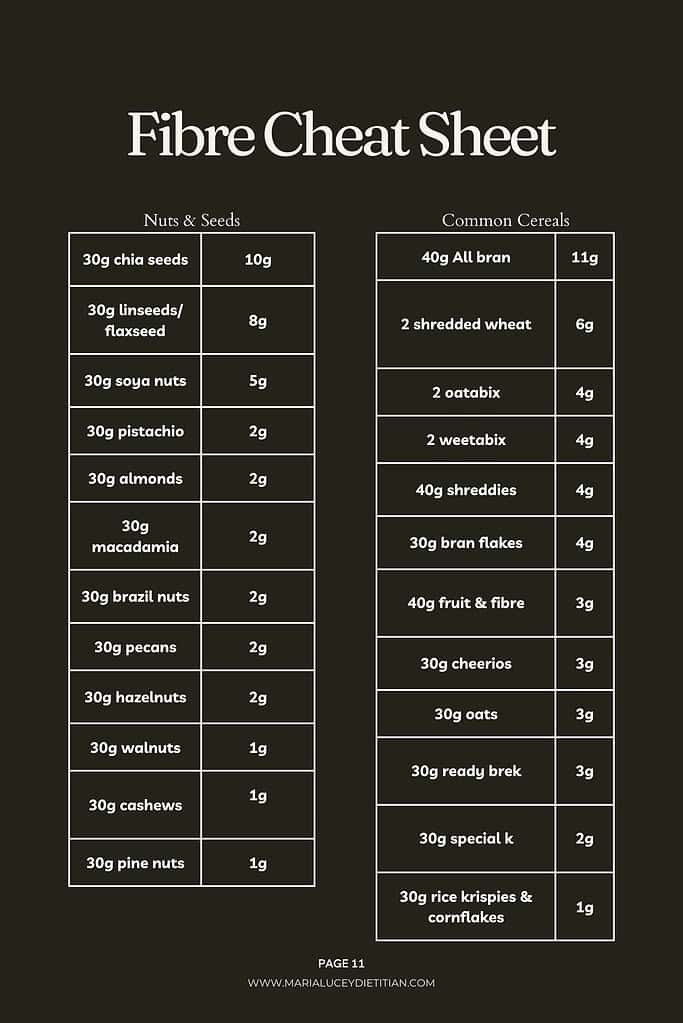
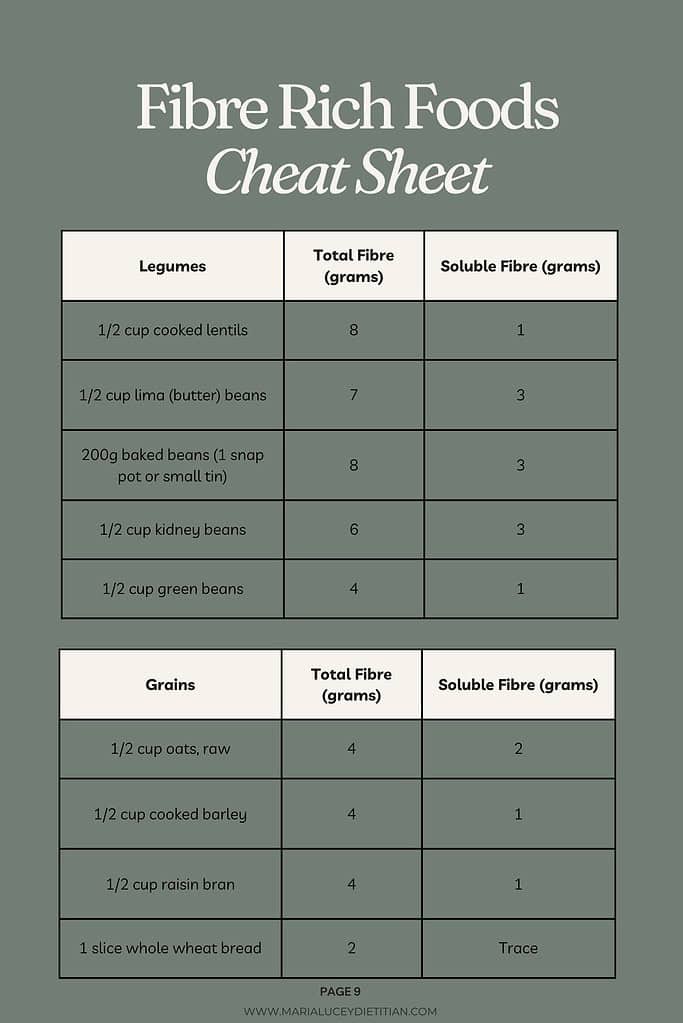
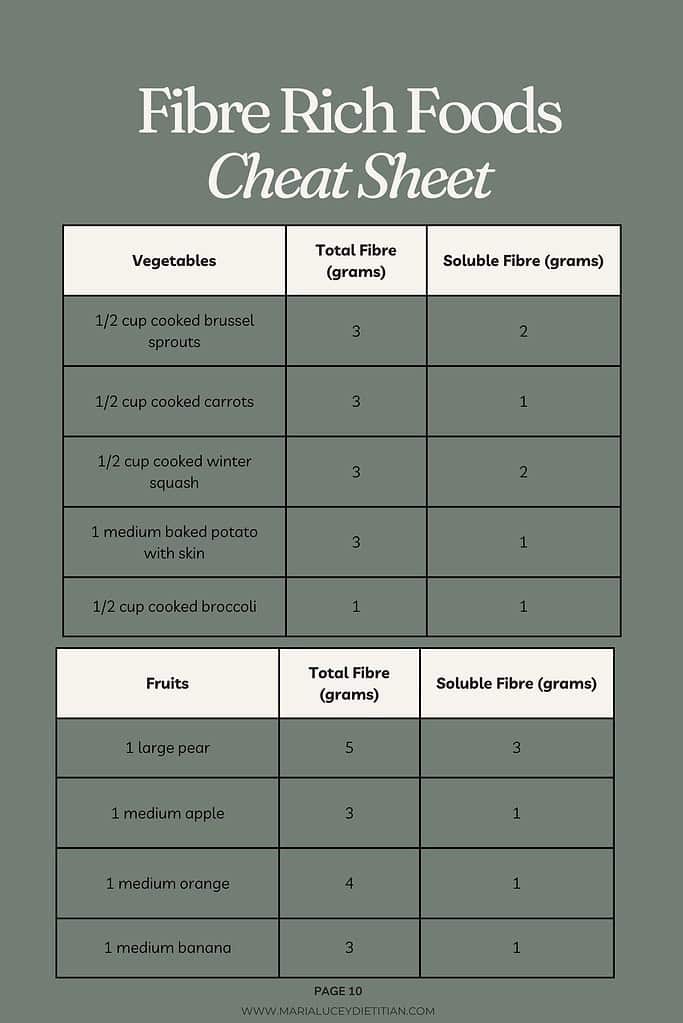
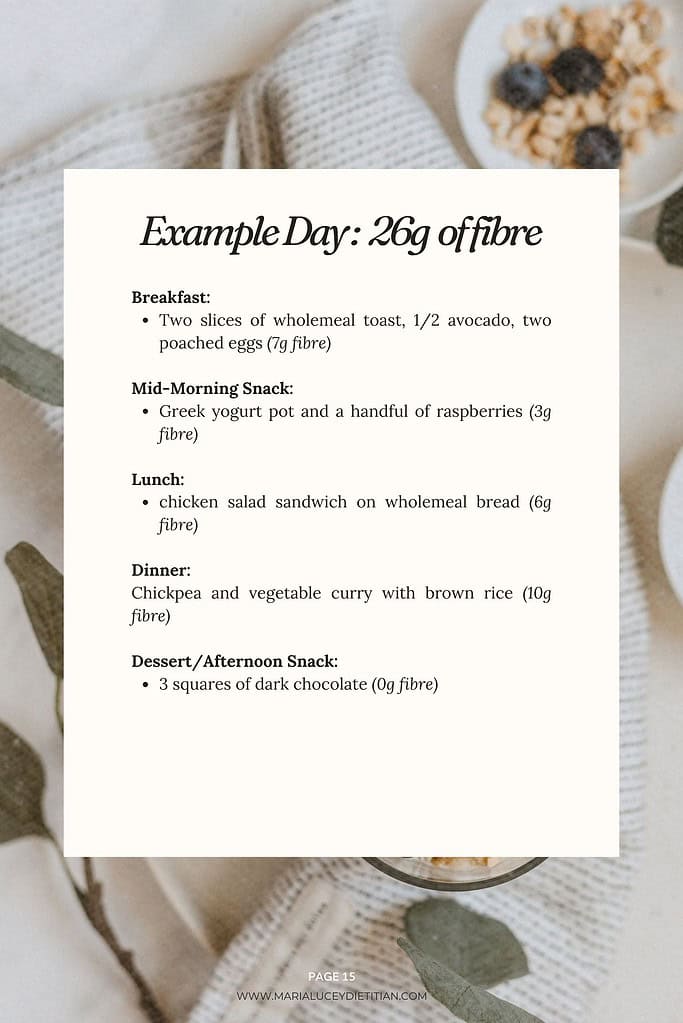
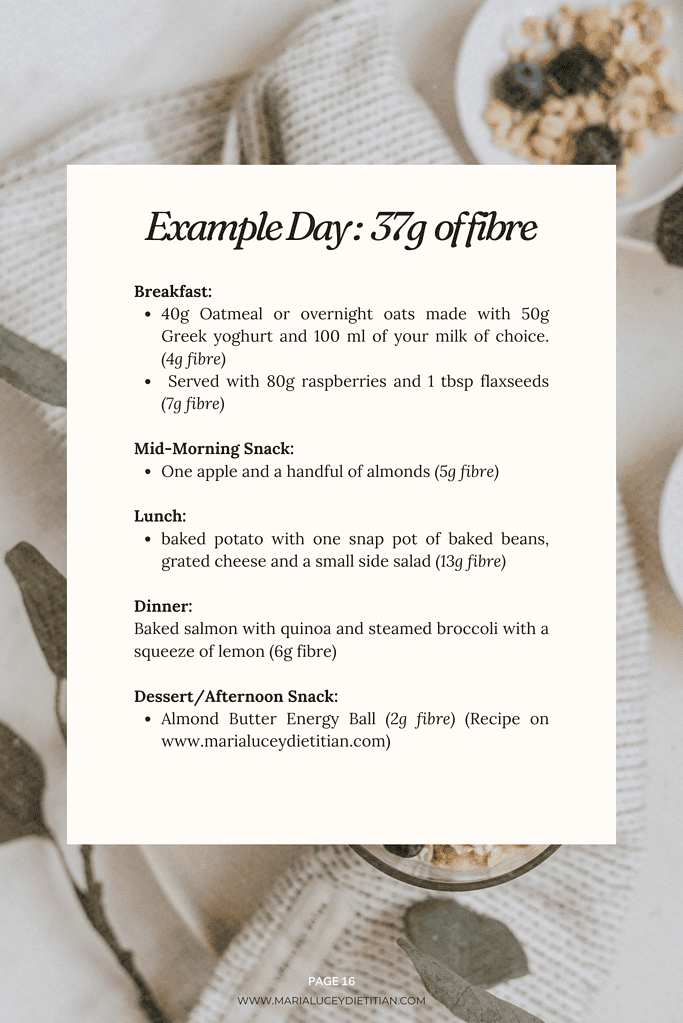
I have put together some fibre cheat sheets below to help make your life easier!
High Fibre Meal Plan Examples
Final Thoughts
Fiber is one of the simplest things to focus on if you want to improve your overall health. It supports digestion, gut health, heart health, blood sugar balance, fullness, and long-term disease prevention.
And the best part is that you do not need to follow a complicated plan. Start small.
Add berries to breakfast. Choose oats. Leave the skin on your potatoes. Add beans to dinner. Sprinkle seeds onto yogurt. Snack on fruit and nuts. Try one new high-fiber recipe this week.
Small changes, done consistently, can make a huge difference.
More High-Fiber Recipes You May Enjoy
If you want more easy ways to eat more fiber, try these next:
- Creamy High-Protein Overnight Oats
- High Protein Oatmeal Recipe
- Single Serve Chia Seed Protein Pudding
- Ninja Creami Smoothie Bowl
- 30 Minute Black Bean Chicken Enchiladas
- Black Bean and Mango Salad
- High Protein Hummus
- Mediterranean Roasted Chickpeas
- Cheesy White Bean Tomato Bake
- Gut-Healthy Oat Breakfast Bars
- Healthy Apple Crumble with Oats



Comments
No Comments